ua

ua

Monday, February 25, 2019

Gandalf : Gandalf 1969


Gandalf were an American psychedelic rock band formed in 1965 in New York City. Originally called the Rahgoos, the group consisted of guitarist Peter Sando, bassist Bob Muller, keyboardist Frank Hubach and drummer Davy Bauer.


They signed a recording contract with Capitol Records in 1967. Producers Koppelman & Rubin were not happy with the band's name, and suggested that it should be changed to the Knockrockers.


However Peter Sando commented that they "hated that and bantered about various names". Despite being against the band's will, and losing local fan recognition, Davy suggested the name "Gandalf and The Wizards", which ended up sticking as "Gandalf".


They recorded their first and only LP the same year. The record includes covers of Tim Hardin, Eden Ahbez and Bonner & Gordon (the writers of "Happy Together") and two songs composed by the band's guitarist Peter Sando. But Capitol spurned them and only released the LP in 1969 with the wrong record inside the sleeve.

The copies were recalled and damaged the band's career. Capitol didn't promote the record which made the sales worse. Over the years the album's reputation grew and it was re-released by Sundazed records in 2002.


[ Gandalf's self-titled album has some attractive baroque-psychedelia with a spacey air, though its quality depends very much on the standard of the material.

Generally they're better the more they rely on the slightly weird and spacey production, as on "Scarlet Ribbons" and their cover of Tim Hardin's "Hang on to a Dream." On tracks like "You Upset the Grace of Living" there's a nice balance of melody and quasi-classical keyboards on the cusp between pop, progressive rock and psychedelia. "Can You Travel in the Dark Alone," one of the few originals (by Peter Sando), is nice, harmonic sunshine pop with a slightly experimental feel, along the lines of some of the better things being done by Californian cult figures like Gary Usher and Curt Boettcher at the time.]

 AllMusic Review by Richie Unterberger


TRACKS


01. Golden Earrings
02. Hang On To A ream
03. Never Too Far
04. Scarlet Ribbons
05. You Upset The Grace Of Living
06. Can You Travel In The Dark Alone
07. Nature Boy
08. Tiffany Rings
09. Me About You
10. I Watch The Moon

Band members

    Peter Sando - guitar
    Frank Hubach - keyboards
    Bob Muller - bass guitar
    Davy Bauer - drums

Take it HERE  FLAC 


Wednesday, February 20, 2019

Love : Forever Changes 1967


Love is an American rock group that was most prominent in the late 1960s and early 1970s. They were originally led by singer/songwriter Arthur Lee, who wrote most of the songs, although some of their best known songs were written by Bryan MacLean. One of the first racially diverse American bands, their music drew on a diverse range of sources including folk rock, hard rock, blues, jazz, flamenco and orchestral pop.
While finding only modest success on the music charts, Love would come to be praised by critics as one of the finest and most important American rock groups of all time. Their third album, Forever Changes (1967), is generally regarded as their masterpiece, included in the Library of Congress' National Recording Registry in 2011.


[ Love's Forever Changes made only a minor dent on the charts when it was first released in 1967, but years later it became recognized as one of the finest and most haunting albums to come out of the Summer of Love, which doubtless has as much to do with the disc's themes and tone as the music, beautiful as it is.
Sharp electric guitars dominated most of Love's first two albums, and they make occasional appearances here on tunes like "A House Is Not a Motel" and "Live and Let Live," but most of Forever Changes is built around interwoven acoustic guitar textures and subtle orchestrations, with strings and horns both reinforcing and punctuating the melodies.


The punky edge of Love's early work gave way to a more gentle, contemplative, and organic sound on Forever Changes, but while Arthur Lee and Bryan MacLean wrote some of their most enduring songs for the album, the lovely melodies and inspired arrangements can't disguise an air of malaise that permeates the sessions.

A certain amount of this reflects the angst of a group undergoing some severe internal strife, but Forever Changes is also an album that heralds the last days of a golden age and anticipates the growing ugliness that would dominate the counterculture in 1968 and 1969; images of violence and war haunt "A House Is Not a Motel," the street scenes of "Maybe the People Would Be the Times or Between Clark and Hillsdale" reflects a jaded mindset that flower power could not ease, the twin specters of race and international strife rise to the surface of "The Red Telephone," romance becomes cynicism in "Bummer in the Summer," the promise of the psychedelic experience decays into hard drug abuse in "Live and Let Live," and even gentle numbers like "Andmoreagain" and "Old Man" sound elegiac, as if the ghosts of Chicago and Altamont were visible over the horizon as Love looked back to brief moments of warmth.

Forever Changes is inarguably Love's masterpiece and an album of enduring beauty, but it's also one of the few major works of its era that saw the dark clouds looming on the cultural horizon, and the result was music that was as prescient as it was compelling.]  AllMusic Review by Mark Deming 

Forever Changes failed to achieve commercial success when it was first released in 1967, but it has since become recognized as one of the greatest albums ever made, ranking 40th on Rolling Stone magazine's 2003 list of The 500 Greatest Albums of All Time, being inducted into the Grammy Hall of Fame in 2008, and being added to the National Recording Registry in 2011.


Musicians

Arthur Lee : lead vocals, guitar
Bryan MacLean : rhythm guitar, background vocals (lead vocals on "Old Man" and co-lead vocals on "Alone Again Or")
Johnny Echols : lead guitar
Ken Forssi : bass guitar
Michael Stuart-Ware : drums, percussion

Additional musicians


David Angel : arranger, orchestrations
Strings : Robert Barene, Arnold Belnick, James Getzoff, Marshall Sosson, Darrel Terwilliger (violins) ; Norman Botnick (viola) ; Jesse Ehrlich (cello) ; Chuck Berghofer (string bass)
Horns : Bud Brisbois, Roy Caton, Ollie Mitchell (trumpets) ; Richard Leith (trombone)
TRACKS

01. Alone Again Or     3:15
02. A House Is Not A Motel     3:25
03. Andmoreagain     3:15
04. The Daily Planet     3:25
05. Old Man     2:57
06. The Red Telephone     4:45
07. Maybe The People Would Be The Times Or Between Clark And Hilldale     3:30
08. Live And Let Live     5:24
09. The Good Humor Man He Sees Everything Like This     3:00
10. Bummer In The Summer     2:20
11. You Set The Scene     6:49

Take it HERE  FLAC


Saturday, February 16, 2019

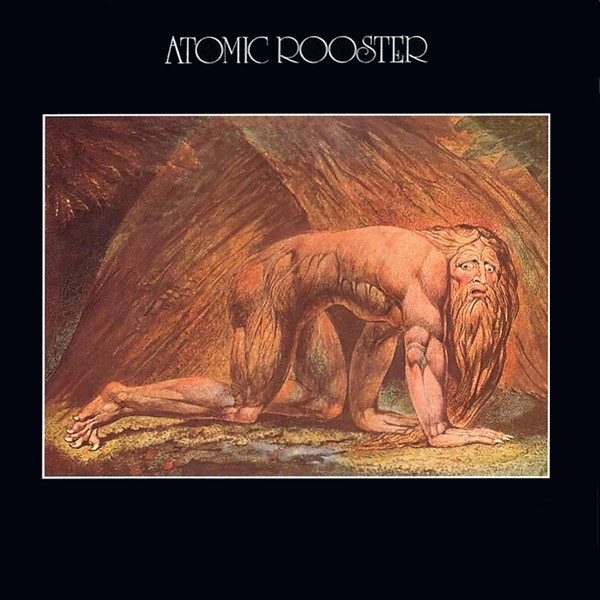
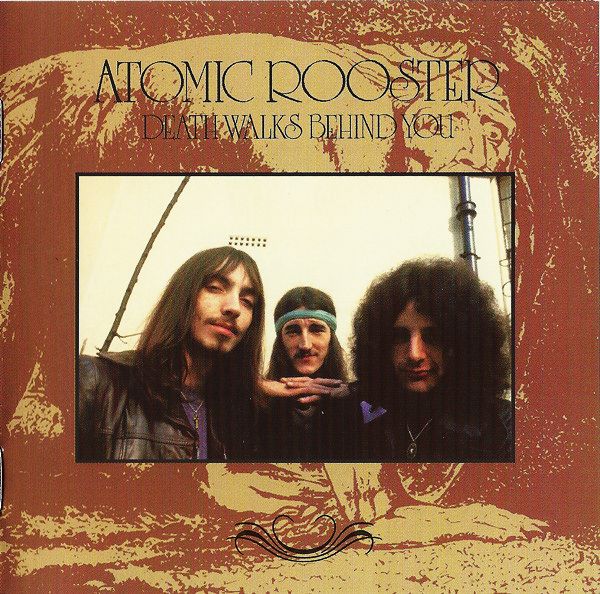
Atomic Rooster : Death Walks Behind You 1970


Atomic Rooster are a British rock band, originally formed by members of the Crazy World of Arthur Brown, organist Vincent Crane and drummer Carl Palmer. Throughout their history, keyboardist Vincent Crane was the only constant member and wrote the majority of their material. Their history is defined by two periods: the early-mid-1970s and the early 1980s. The band went through radical style changes, but they are best known for the hard,/ progressive rock sound of their hit singles, "Tomorrow Night" (UK No. 11) and "Devil's Answer" (UK No. 4), both in 1971.


Death Walks Behind You is the second studio album by British rock band Atomic Rooster. It was their first album to receive US release, albeit in a different sleeve. It is commonly thought of as the archetypal Atomic Rooster album, recorded by the 'classic' line-up of Vincent Crane, John Du Cann and Paul Hammond. It is certainly, critically and commercially, their most successful album and often hailed as a classic of the progressive rock genre.

{ "Devil's Answer" might be the record for which Atomic Rooster are remembered, but it was their second album that posted warning that they were on the verge of creating something dazzling ,simply because the record itself is a thing of almost freakish beauty.

With only organist Vincent Crane surviving from the original lineup, and John Du Cann coming in to relieve him of some of the songwriting duties, Death Walks Behind You opens at a gallop and closes with a sprint. The title track is effectively spooky enough for any Hammer horror aficionado, all descending pianos and Psycho-screaming guitars, while "Gershatzer," a duet for organ and percussion, proves that new drummer Paul Hammond is more than a match for the departed Carl Palmer.


It's in between these dramatic bookends, however, that Rooster truly peak, with the stately "VUG," the pensive "Nobody Else," and the truly amazing "Tomorrow Night" (one of the scariest love songs ever let loose on the U.K. chart) all impressing. Crane's liner notes, incidentally, remind us that the album packed a different version of the hit, with an extended ending that descends into unimagined chaos ,a shocker for the pop kids, perhaps, but a fabulous bridge into the succeeding "7 Streets."


Possibly the best evidence for this being Atomic Rooster's masterpiece, however, comes not simply from what's on the album, but for what has been left off. An excellent repackaging and remastering job restores the original artwork in all its gatefold glory, but you'll search in vain for bonus tracks ,not because there were none to add, but because they simply wouldn't fit. Sit through Death Walks Behind You, after all, and you really won't need any more surprises. }
 AllMusic Review by Dave Thompson

Personnel

    John Du Cann : guitars, lead vocals, bass
    Vincent Crane: Hammond organ, backing vocals, piano
    Paul Hammond : drums, percussion


TRACKS

01. Death Walks Behind You (Du Cann, Crane) 7:28
02. Vug (Crane) 4:57
03. Tomorrow Night (Crane) 3:56
04. 7 Streets (Du Cann) 6:40
05. Sleeping for Years (Du Cann) 5:24
06. I Can't Take No More (Du Cann) 3:32
07. Nobody Else (Crane, Du Cann) 4:58
08. Gershatzer (Crane) 7:58


DEATH WALKS BEHIND YOU


Death Walks Behind You,
Death Walks Behind You.

Lock The Door, Switch The Light.
You'll Be So Afraid Tonight.
Hide Away From The Bad,
Count The Nine Lives That You Had.
Start To Scream, Shout For Help,
There Is No One By Your Side.

To Forget What Is Done,
Seems So Hard To Carry On.
Luck Is False, That It's Near,
Bring Yourself To Understand,
It's Your Fate, Or What's Cast,
Point a Finger At Yourself.

Death Walks Behind You,

Lock Your Door, Switch The Light,
You'll Be so Afraid Tonight.
Hide Away From The Bad,
Count The…
Start To Scream, Shout For Help,
There Is No One By Your Side.

To Forget What Is Done,
Seems So Hard To Carry On.
(Death Walks Behind You.)
Carry On.
(Death Walks Behind You.)
Death Walks Behind You.

Flac (Extended Version) Size:  470 MB

Wednesday, February 06, 2019

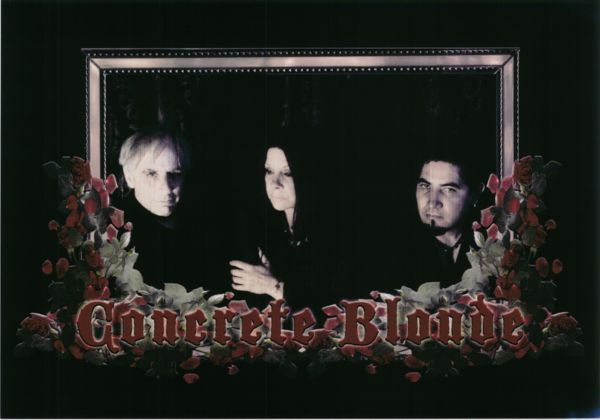
Concrete Blonde : Mexican Moon 1993


Concrete Blonde were an alternative rock band from Hollywood, California. They were active from 1982 to 1995, from 2001 to 2004, and then reunited in 2010 and split up again in 2012. They were best known for their 1990 album Bloodletting, their top 20 single "Joey", and Johnette Napolitano's distinctive vocal style.


Singer-songwriter/bassist Johnette Napolitano formed the band Dream 6 with guitarist James Mankey in Los Angeles in 1982. The band released a single called "Heart Attack" under the name Dreamers on the 1982 compilation album, The D.I.Y. Album; this was evidently their first recording. As Dream 6, they released an eponymous EP in France on the Happy Hermit label in 1983. When they signed with I.R.S. Records in 1986, label-mate Michael Stipe suggested the name Concrete Blonde, describing the contrast between their hard rock music and introspective lyrics. They were joined by drummer Harry Rushakoff on their eponymous debut album.


Their first release was 1986's Concrete Blonde, which included "Still in Hollywood". They added a full time bass guitarist, Alan Bloch, for their 1989 release, Free. This allowed Napolitano to focus on her singing without the burden of playing the bass at the same time. This album included the college radio hit "God Is a Bullet".


Their third album, 1990's Bloodletting, became their most commercially successful. Roxy Music drummer Paul Thompson replaced Rushakoff on Bloodletting while Rushakoff was in treatment for drug addiction. The album was certified gold by the RIAA and included their highest charting single, "Joey", which spent 21 weeks on the Billboard Top 100 Chart, peaking at 19.


The album is a striking marriage of Johnette Napolitano's dark, lyrical imagery and the band's alternative-tinged pop sensibilities making it, perhaps, their most fully realized effort. "Jenny I Read" kicks things off with the tale of a chance encounter of a fallen, reclusive starlet. Guitarist James Mankey shows versatility playing acoustic and Spanish guitar on the dreamy title track and the wah-wah effects of the brooding "Jesus Forgive Me (For the Things I'm About to Say)." "Heal It Up" was the unsuccessful single but is a bracing number with a ferocious vocal performance by Napolitano. Despite the inspired playing, intelligent and insightful lyrics, and the crisp production, Mexican Moon failed to expand the group's audience and would prove to be their last release before breaking up.


The music on Mexican Moon takes the gothic rock of their previous albums and adds more of a hard rock edge to it. Johnette Napolitano provided the vocals, bass guitar, samples, and the album artwork, and she was accompanied by drummer Paul Thompson and guitarist James Mankey.


"Jenny I Read" details the rise to stardom and subsequent fall into happy obscurity of a fashion model (rumoured to be Bettie Page), while "Mexican Moon" finds lead singer Johnette Napolitano singing about a failed romance and fleeing into Mexico. The song "Jonestown" is a scathing critique of the theology surrounding the Jonestown Massacre and opens with a minute-long sample of Jim Jones ranting about warfare. "End of the Line" is a Roxy Music song, written by Bryan Ferry and originally released on the Siren album.


On the closing track, "Bajo la Lune Mexicana", Napolitano (who does not speak Spanish) wrote the Spanish lyrics, which are a literal translation of the lyrics to the album's title track. However, none of the verbs are conjugated, noun gender is ignored, and correct grammar is non-existent, and yet mostly doesn't seem to detract from the overall translation from Spanish to English.

TRACKS

01."Jenny I Read"    5:20
02."Mexican Moon"    5:03
03."Heal It Up"    4:21
04."Jonestown"    6:09
05."Rain" (James Mankey, Napolitano, Murphy)    3:28
06."I Call It Love" (Mankey, Napolitano)    5:17
07."Jesus Forgive Me (For the Things I'm About To Say)"    5:17
08."When You Smile" (Steve Wynn)    4:21
09."Close To Home"    3:32
10."One of a Kind" (Napolitano, Texacala Jones)    3:55
11."End of the Line" (Bryan Ferry)    4:41
12."(Love Is a) Blind Ambition"    6:15
13."Bajo la Lune Mexicana" ("Under the Mexican Moon")    5:07


Take it HERE

Wednesday, January 30, 2019

The Rocky Horror Show Original Roxy Cast : 1974


The Rocky Horror Show is a musical with music, lyrics and book by Richard O'Brien. A humorous tribute to the science fiction and horror B movies of the late 1940s through to the early 1970s.


Τhe musical tells the story of a newly engaged couple getting caught in a storm and coming to the home of a mad transvestite scientist, Dr Frank-N-Furter, unveiling his new creation, a sort of Frankenstein-style monster in the form of an artificially made, fully grown, physically perfect muscle man named Rocky Horror, complete "with blond hair and a tan".


The show was produced and directed by Jim Sharman.
The original London production of the musical premiered at the Royal Court Theatre (Upstairs) on 19 June 1973 (after two previews on 16 and 18 June 1973).


It later moved to several other locations in London and closed on 13 September 1980. The show ran for a total of 2,960 performances and won the 1973 Evening Standard Theatre Award for Best Musical.


Its 1974 debut in the US in Los Angeles had a successful nine-month run, but its 1975 Broadway debut at the Belasco Theatre lasted only three previews and forty-five showings, despite earning one Tony nomination and three Drama Desk nominations.


Various international productions have since spanned across six continents as well as West End and Broadway revivals and eight UK tours.


Actor Tim Curry, who originated the role of Dr. Frank-N-Furter in the original London production, became particularly associated with the musical.


The musical was adapted into the 1975 film The Rocky Horror Picture Show, starring O'Brien as Riff Raff, with Curry also reprising his role .


Τhe film has the longest-running release in film history. In 2016, it was adapted into the television film The Rocky Horror Picture Show: Let's Do the Time Warp Again.


The musical was ranked eighth in a BBC Radio 2 listener poll of the "Nation's Number One Essential Musicals".

The Rocky Horror Show Original Roxy Cast – The Rocky Horror Show
Label : Ode Sounds & Visuals
Format: CD, Album, Reissue
Country : Canada
Released : 1974
Genre : Rock
Style : Musical


Tracklist

01. Science Fiction - Double Feature : Jamie Donnely   
02. Damn It, Janet : Abigale Haness - B. Miller    
03. Over At The Frankenstein Place : Abigale Haness - B. Miller    
04. Sweet Transvestite : Tim Carry   
05. Time Warp : Bruce Scott - Jamie Donelly - Bonie Enten - Graham Jarvis   
06. Sword Of Damoclese : Kim Milford
07. Charles Atlas Song : Tim Carry
08. What ever happened to Saturday night : Meat Loaf
09. Charles Atlas Song (Reprise) : Tim Carry   
10. Toucha,Toucha,Toucha,Touch me : Albigale Haness   
11. Once In A While : Albigale Haness - B. Miller
12. Eddie's Teddy : Meat Loaf
13. Planet shmanet Janet : Tim Carry
14. Planet hot dog    
15. Rose Tint My World : Tim Carry - Boni Enten - Albigale Haness - Kim Milford   
16. I'm Going Home : Tim Carry    
17. Superheroes : Albigale Haness - B. Miller 

 Staring :

Tim Carry and the original Roxy cast


Jamie Donnelly
Boni Enten
Albigale Haness
Alan Martin
Meat Loaf
Kim Milford
B. Miller
Susan Morse
John Mark Robinson
Bruce Scott
Graham Jarvis

Directed : By Jim Sharman
Rock Music and Lyrics : By Richard O'Brien


SCIENCE FICTION - DOUBLE VISION  LYRICS 


Michael Rennie was ill the day the earth stood still
But he told us where we stand
And Flash Gordon was there in silver underwear
Claude Rains was the invisible man

Then something went wrong for Faye Wray and King Kong
They got caught in a celluloid jam
Then at a deadly pace it came from outer space
And this is how the message ran

Science fiction, double feature
Doctor X will build a creature
See androids fighting Brad and Janet
Anne Francis stars in Forbidden Planet
Whoa oh oh oh oh
At the late night double feature picture show

I knew Leo G. Carroll was over a barrel
When Tarantula took to the hills
And I really got hot when I saw Janet Scott fight a
Triffid that spits poison and kills
Dana Andrews said Prunes gave him the runes
And passing them used lots of skills
But When Worlds Collide said George Pal to his bride
'I'm gonna give you some terrible thrills'


The Rocky Horror Show Original London Cast HERE
The Rocky Horror Picture Show Soundtrack HERE   

Monday, January 21, 2019

Virgin Prunes : The Moon Looked Down And Laughed 1986


The band consisted of childhood friends of U2's Bono. Lypton Village was a "youthful gang" created by Bono (ne Paul Hewson), Friday (ne Fionan Hanvey) and Guggi (ne Derek Rowen) in the early 1970s. 


Known for their outrageous and controversial stage performances, led by theatrical singer/songwriter Friday, the band began playing small shows in Dublin, gaining them a cult audience.


Friday and fellow vocalist Guggi, along with third vocalist Dave-iD Busaras, guitarist Dik Evans (brother of U2's The Edge), bassist Strongman (Trevor Rowen, brother of Guggi) and drummer Pod (Anthony Murphy), completed the original lineup.


Pod left the group and was replaced by Haa-Lacka Binttii (ne Daniel Figgis). With Binttii on drums, tape loops and keyboards, the band secured a deal with Rough Trade Records.


They released their first single, "Twenty Tens" on their own Baby Records label (distributed by Rough Trade) on 8 January 1981, followed by a second single, "Moments and Mine (Despite Straight Lines)", on 27 June 1981.


The Moon Looked Down and Laughed is the second studio album. It was released in January 1986 by Baby Records in Europe, and on Touch and Go Records in the U.S..


The sound of 1986's The Moon Looked Down and Laughed is the sound of a band being pulled apart by the differing ideas of its members.

Released : 1986
Genre : Rock
Style : New Wave, Gothic


TRAXS

01. Heaven    
02. Love Lasts Forever    
03. I Am God    
04. Sons Find Devils    
05. Alone    
06. The Moon Looked Down And Laughed    
07. Uncle Arthur's Lonely World
08. Don't Look Back    
09. Betrayal    
10. Deadly Sins    
11. Day Of Ages    
12. True Life Story    
13. The White History Book    


Mary D'Nellon : guitar
Gavin Friday : vocals
Pod : drums
Strongman : bass guitar
Dave-iD Busaras : vocals