ua

ua

Monday, December 02, 2019

The Standells: Dirty Water 1966 - The Standells: Why Pick on Me Sometimes Good Guys Don't Wear White 1966


The Standells are an American garage rock band from Los Angeles, California, formed in the 1960s, who have been referred to as the "punk band of the 1960s", and said to have inspired such groups as the Sex Pistols and Ramones. They are best known for their 1966 cover of Ed Cobb’s hit "Dirty Water".


[ The Standells made number 11 in 1966 with "Dirty Water," an archetypal garage rock hit with its Stones-ish riff, lecherous vocal, and combination of raunchy guitar and organ. While they never again reached the Top 40, they cut a number of strong, similar tunes in the 1966-1967 era that have belatedly been recognized as '60s punk classics. "Garage rock" may not have been a really accurate term for them in the first place, as the production on their best material was full and polished, with some imaginative touches of period psychedelia and pop.


Considerably toughening their image, the group churned out four albums in 1966 and 1967, as well as appearing in (and contributing the theme song to) the psychedelic exploitation movie Riot on Sunset Strip. Cobb, in addition to writing "Dirty Water," also penned their other most enduring singles, including "Sometimes Good Guys Don't Wear White," "Why Pick on Me," and "Try It" (the last of which was widely banned for its suggestive delivery).


The Standells never had a stable lineup; bass players were constantly leaving (John Fleck, aka John Fleckenstein, who was briefly in an early version of Love, held the spot for a while), and Dick Dodd went solo in 1968, the year they released their last single.
Richie Unterberger ]


In 1965 the group – Dodd, Tamblyn, Valentino and Lane – signed with Capitol Records' label Tower, teaming up with producer Ed Cobb. Cobb wrote the group's most popular song, "Dirty Water", which the band recorded in late 1965. The song's references to the city of Boston are owed to Cobb's experiences with a mugger in Boston. The song also makes reference to the Boston Strangler and the dorm curfews for college women in those days.
In early 1966, after recording "Dirty Water", Dodd briefly left the Standells, and was replaced by Dewey Martin, who became a member of Buffalo Springfield.


Along with Why Pick on Me, this was the group's strongest album, although you're always better off with a greatest hits collection. "There Is a Storm Comin'" and "Pride and Devotion" are a couple of strong numbers that don't make it onto compilations, and "Rari, " the moody B-side of "Dirty Water, " tis one of their best little-known tracks. The CD reissue takes off one cut (the easily found "Sometimes Good Guys Don't Wear White") and adds six bonus tracks of only mild interest, including a version of "Batman." Add points for finding a longer version of "Rari, " though.


Dirty Water is listed in the Rock & Roll Hall of Fame as one of the 500 songs that shaped Rock & Roll.. A biography titled "Love that Dirty Water – The Standells and the Improbable Red Sox Victory Anthem" is currently available on Amazon.com, Barnes & Noble, Target, and in other retail outlets.


Today, the Standells consist of original members Larry Tamblyn (lead singer & keyboard), Dick Dodd (lead singer, percussion & guitar), John Fleckenstein (bass), plus Mark Adrian (co-lead singer & guitar) and veteran drummer Greg Burnham. They are currently working on their new record album, the first in over 45 years.

ALBUMS

The Standells in Person at P.J.s. (1964) (re-edited as Live and Out of Sight with two bonus songs) (1966, 1990)
Dirty Water (1966)
Why Pick on Me Sometimes Good Guys Don't Wear White (1966)
The Hot Ones! (1967)
Try It (1967)
Bump (2013)

The Standells: Dirty Water
Label: Sundazed Music: SC 6019
Format: CD, Album, Reissue
Country: US
Released: 2016
Genre: Rock
Style: Garage Rock, Psychedelic Rock

TRAXS

01. Medication (Minette Alton, Ben DiTosti) – 2:27
02. Little Sally Tease (Jim Valley) – 2:35
03. There's a Storm Coming (Ed Cobb) – 2:43
04. 19th Nervous Breakdown (Mick Jagger, Keith Richards) – 3:55
05. Dirty Water (Ed Cobb) – 2:48
06. Pride and Devotion (Larry Tamblyn) – 2:15
07. Hey Joe, Where You Gonna Go? (Chester Powers)* – 2:10
08. Why Did You Hurt Me? (Dick Dodd, Tony Valentino) – 2:30
09. Rari (Ed Cobb) – 3:18
10. Batman (Neil Hefti) – 3:04
11. It's All in Your Mind (Ed Cobb) – 2:38
12. Love Me (Dick Dodd, Tony Valentino) – 2:45
13. Medication [Instrumental] (Minette Alton, Ben DiTosti) – 2:43
14. Poor Man's Prison (Keith Colley, Knox Henderson) – 2:23
15. Take a Ride – 2:08

A CD version of the album, released in 1994, deletes "Sometimes Good Guys Don't Wear White" (as it was also included on the band's follow-up album), and adds six more songs.

MP3 @ 320 Size: 103 MB
Flac  Size: 142 MB

WHY PICK ON ME - SOMETIMES GOOD GUYS DON'T WEAR WHITE 1966

For their second Tower album, Why Pick On Me, the Standells received a significant sonic boost with the move to American Recording Company. Legendary engineer Richie Podolor cut the best sounding records of the era; from the Standells, Chocolate Watchband, and Electric Prunes to Steppenwolf and Three Dog Night.


The drum tracks on this album are simply not to be believed, the bass drum sound possibly registering on the Richter scale.

Here the Standells build on their strengths with tough originals from producer Ed Cobb, equally-hard driving outside material ("Black Hearted Woman," "Mainline"), and notably, the emergence of Larry Tamblyn as a songwriter (his "Mr. Nobody" arguably the album's highlight).

The Standells 
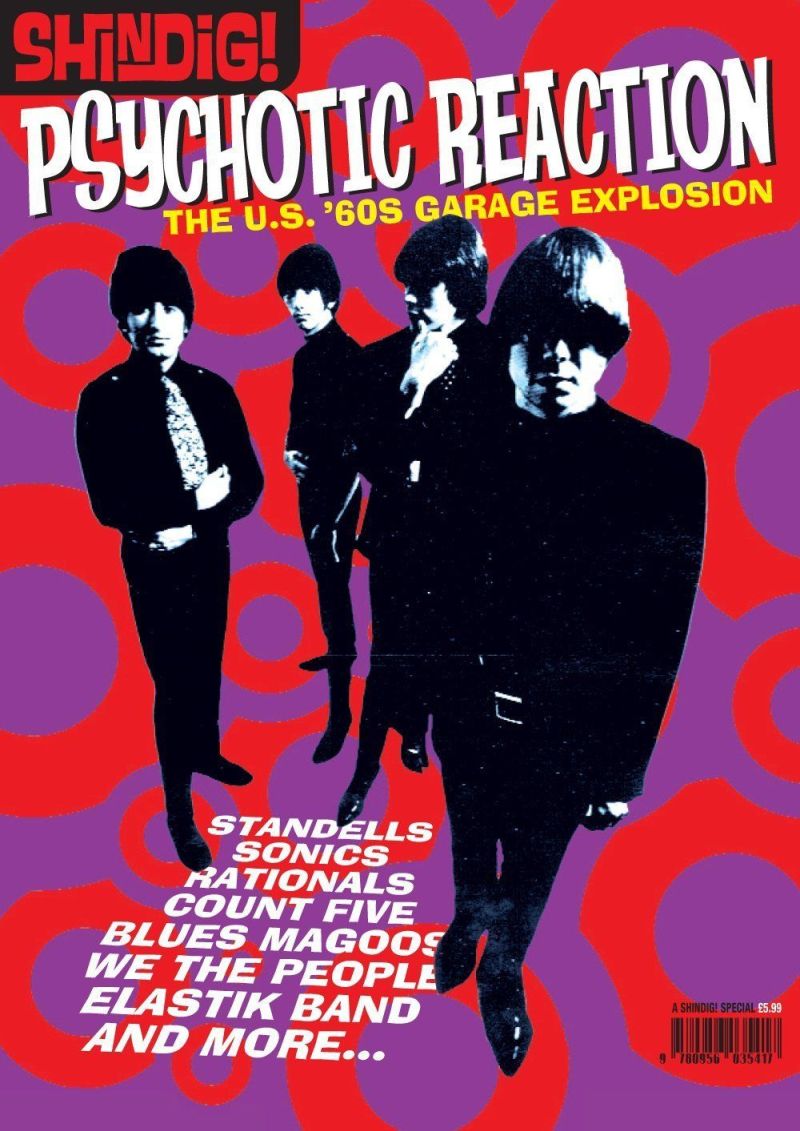
Larry Tamblyn - Organ, Guitar, Vocals
Tony Valentino - Guitar, Vocals
Dave Burke - Bass, Vocals
Gary Lane - Bass
Dick Dodd - Drums, Lead Vocals

TRAXS

01. Why Pick On Me (E. Cobb) - 3:75
02. Paint It Black (Jagger, Richards) - 3:76
03. Mi Hai Fatto Innamorare (T.Valentino) - 2:28
04. 1 Hate To Leave You (T.Valentino) - 2:35
05. Black Hearted Woman (Houle) - 3:70
06. Sometimes Good Guys Don't Wear White (E.Cobb) - 3:36
07. The Girl And The Moon (L. Tamblyn) - 2:55
08. Looking At Tomorrow (B.Mann, CWeil) - 2:29
09. Mr. Nobody (L.Tamblyn) - 2:52
10. My Little Red Book (Bacharach, David) - 2:24
11. Mainline (Huntress, Chellis) - 2:07
12. Have You Ever Spent The Night In Jail (E.Cobb) - 2:57
13. Our Candidate (M.Smith) - 2:35
14. Don't Say Nothing At All (instrumental) (Hill, Washington) - 2:27
15. The Boy Who Is Lost (L.Tamblyn) - 2:33

MP3 @ 320 Size: 97.7 MB
Flac  Size: 205 MB

Tuesday, November 26, 2019

Various Artists - Pebbles, Vol. 9 Subtitled: Southern California 2, Original '60s Punk & Psych Classics 1996


Various Artists - Pebbles, Vol. 9
Subtitled: Southern California 2, Original '60s Punk & Psych Classics
1996 Archive International Productions (AIP)
CD cat. #: AIP CD 5026


Pebbles, Volume 9 is a compilation album among the CDs in the Pebbles series; it is subtitled Southern California 2. The previous CD in the series, Pebbles, Volume 8 also features bands from
Southern California; while Highs in the Mid-Sixties, Volume 1, Highs in the Mid-Sixties, Volume 2, and Highs in the Mid-Sixties, Volume 3 showcase music from Los Angeles specifically.
This album was released on AIP Records in 1996 as #AIP-CD-5026 (although the disk is actually imprinted with the catalogue number of the previous volume). 
Despite the similar catalogue number, there is no relation between the tracks on this CD and the tracks on the corresponding LP.
Notes on the tracks


According to the liner notes, the track by the Standells had not been reissued before now; and this is probably the first-released version of the early Monkees hit "I'm Not Your Stepping Stone". One of the members of the Second Helping was Kenny Loggins, and this single is his earliest known release. The Velvet Illusions are actually not from California but were a Yakima, Washington based band; while often mentioned as having heiress Patricia Hearst's former boyfriend Steven Weed as a member, the band actually featured a different Steve Weed. The final track is from an unreleased acetate by the band that is best known for "I Never Loved Her" (included on the Pebbles, Volume 8 CD).


The two songs by Fenwyck, "I Wanna Die" and "Iye" were produced by Zane Ashton (aka Bill Aken) who had founded Progressive Sounds of America in 1963 and recorded the two sides at Western Recorders in Hollywood, California. After an emotional breakdown when one of his artists 'Kathy
Dee' suffered a stroke and died, he sold the label to the Quinlan Corporation and Jay Bonner with the stipulation that 'Fenwyck' would be the first record released under the new management. That is why the label says "Produced by Zane Ashton." Ironically, although the new owners ridiculed him as being emotionally unstable, without its founder's love of rock and roll and his production instincts, the label died a very quick death and within a year was out of business.

Even though its not quite as good as its predecessor, the second volume of the Pebbles series to focus on ultra-obscure sixties garage rock from Southern California is still a smokin' collection of tunes, stuffed with mean fuzz guitars and primal vocals, courtesy of a whole buncha bands that just never
managed to make it big. A few songs that make this disc a blast o' joy are Ty Wagner's "I'm a No Count," a nasty two-chord outcast anthem that bristles with teenage agression, as well as Thee In Set's stomping caveman frat pounder, "They Say." There's also "Someday You'll Cry," a snotty garage-pop tune from the pre-"Dirty Water" Standells, and the Care Takers' funky soul-shakin' cover of Bob Seger's "East Side Story" (shut up, Bob Seger rules!), not to mention the Velvet Illusions' menacing "Velvet Illusions" (gotta love bands with their own theme songs). The Children of the Mushroom's "August Madamoiselle" is a psychedelic tune that manages to pull of the neat trick of being both dark and whimsical. Great stuff. The David's "I'm Not Alone" is a fuzzy, flailing, organ-propelled fuzz thumper and the Second Helping's "Let Me In" is just plain wonderfully creepy. There are plenty of other highlights (don't even get me started on the W.C. Fields Memorial String Band!), but this set falls a bit short of the five star rating, thanks to the inclusion of a few tunes that are little more than by-the-book garage rock (I'm lookin' at you, "Won't Come Down!"). 
Still, this is an excellent disc, a really good addition to the Pebbles series, and it deserves to belong in every garage fan's collection.


[Twenty-four Socal garage-band obscurities from 1965-69, more psychedelic in tone than the average Pebbles collection (though not every track is psychedelic-influenced). It's about average for a '60s
garage anthology, with some standouts like the Standells' Beatlesque "Someday You'll Cry" (not available on any other CD), the David's garage-pop take on the Doors ("I'm Not Alone"), the Gypsy Trips' folk-rock "Ain't It Hard" (later covered by the Electric Prunes), a pre-Monkees version of "I'm Not Your Stepping Stone" (by the W.C. Fields Memorial Electric String Band), and the blues-rock protest of the Starfires' "Cry for Freedom." It's the first time on CD for all selections, a few of which had been previously unreissued.
Richie Unterberger, AllMusic]

Track listing


01. Ty Wagner and the Scotchmen: "I'm a No Count"; rel. 1966
02. The Caretakers: "East Side Story"; rel. 1966
03. The Hysterics: "Won't Get Far"; rel. 1965 (?)
04. The Standells: "Someday You'll Cry"; rel. 1965
05. The Magic Mushroom: "I'm Gone"; rel. 1966
06. Fenwyck: "IYE"; rel. 1967 On Progressive Sounds of America
07. The Buddhas: "Lost Innocence"; rel. 1967 (?)
08. The David: "I'm Not Alone"; rel. 1967 (?)
09. The David: "40 Miles"; rel. 1966
10. The Edge: "Scene thru the Eyes"; rel. 1969
11. The Second Helping: "Let Me In"; rel. 1967 (?)
12. Good Feelings: "Shattered"; rel. 1968
13. Gypsy Trips: "Ain't It Hard"; rel. 1965
14. The Nervous Breakdowns: "I Dig Your Mind" (Rusy Evans)
15. Moms Boys: "Up & Down"; rel. 1967 (?)
16. W. C. Fields Memorial Electric String Band: "I'm Not Your Stepping Stone";     rel. 1966
17. Children of the Mushroom: "August Mademoiselle"; rel. 1967 (?)
18. The Velvet Illusions: "Velvet Illusions"; rel. 1967
19. Perpetual Motion Workshop: "Won't Come Down"; rel. 1967 (?)
20. The Crumpets: "Mama Baby"; rel. 1966 (?)
21. Sounds Unreal: "Scene of the Crime"; rel. 1967
22. Mal-T's: "Here to Stay"; rel. 1966 (?)
23. Thee In Set: "They Say"; rel. 1966 (?)
24. The Starfires: "Cry for Freedom"; rel. 1967 (?)

Friday, November 22, 2019

Spacemen 3 : Recurring 1991


Spacemen 3 were an English alternative rock band, formed in 1982 in Rugby, Warwickshire by Peter Kember and Jason Pierce, known respectively under their pseudonyms Sonic Boom and J Spaceman. Their music is known for its brand of "minimalistic psychedelia".


They gained a reputation as a 'drug band' due to the members' drug-taking habits and Kember's candid interviews and outspoken opinions on recreational drug use. Kember and Pierce were the only members common to all line-ups of the band. Both founding members have enjoyed considerable success with their respective subsequent projects: Sonic Boom/Spectrum and Spiritualized.


In 1984 they made their first studio recordings at the home studio of Dave Sheriff in Rugby. This material – which included early iterations of the songs "Walkin' with Jesus", "Come Down Easy" and "Thing'll Never be the Same" – was used for a short demo tape entitled For All The Fucked Up
Children Of The World We Give You Spacemen 3. They got a few hundred cassette copies made and produced their own artwork and booklet to accompany it, selling the tapes for £1 at a local record shop. Spacemen 3's music at this stage had a loose, swampy Blues feel; some songs included harmonica and slide guitar, and their style sounded akin to The Cramps. These early demo recordings, which Kember later recalled as being "really dreadful", would later be released unofficially in 1995 on the Sympathy for the Record Industry label, thus providing an insight into the band's embryonic sound.


Kember and Pierce opted to upgrade their guitar equipment ahead of recording the new demos. Kember purchased a Burns Jazz electric guitar and 1960s Vox Conqueror amplifier; whilst Pierce bought a Fender Telecaster and a 1970s HH amplifier. Both of their new amplifiers included distortion/fuzz and tremolo; these two effects were key components of Spacemen 3's signature sound.


In January 1986, Spacemen 3 attended the Studio Morocco based at the home of Carlo Marocco at Piddington, outside Northampton, to record their new demo tape. They spent three-and-a-half days at the 16-track studio. Recording live as a group, with minimal overdubs, they managed to get demos for approximately seven songs. Kember and Pierce handled the production. with studio manager Dave Howard dealing with the technicalities. These "fine set of performances" (Ned Raggett, AllMusic) would later be unofficially released as the vinyl album Taking Drugs to Make Music to Take Drugs To on the Father Yod label in 1990 (albeit described incorrectly as "rehearsals in Rugby").


Spacemen 3 managed to obtain a record deal shortly after producing their new demos.
The Spectrum album was advertised as being by the "founder member/leader of Spacemen 3".
Also in January, Pierce was developing ideas for forming a new band or side project of his own. He invited Spacemen 3 compatriots, Refoy, Carruthers and Mattock, to jam and rehearse with him at a
small church hall and his flat. Initially it was informal, but this was the origin of Pierce's Spacemen 3 'splinter' band, Spiritualized, comprising all the same members as Spacemen 3 except for Kember. In February 1990, this new grouping recorded "Anyway That You Want Me". This was recorded at VHF Studios; the purpose of these sessions was kept secret from Kember who was still working there. Speaking in 1991, Pierce explained the purpose of starting Spiritualized.

Recurring was the fourth and final Spacemen 3 studio album, finally released (after considerable delay) in February 1991, some time after the band had broken up. By the time the album was recorded, relations between the band had soured to the extent that the record is in 2 parts - the first side by Peter Kember, and the second by Jason Pierce.


The album included "Hypnotized", a Pierce composition that was a minor hit in the UK in 1989.
The only track on which both Pierce and Kember appear is "When Tomorrow Hits", a cover of a Mudhoney song, originally intended for a double A-side split single, with Mudhoney covering "Revolution" from Playing With Fire. This release was scotched when Kember caught wind of the fact that Mudhoney had fitted "Revolution" with somewhat irreverent lyrics about methadone suppositories. The Mudhoney recording eventually surfaced as a b-side. There's a subtle continuity between both tracks, specifically duelling references to The Stooges; the Spacemen 3 track opens with the "look out!" invocation that began "Loose", and "When Tomorrow Hits" is mostly a rewrite of "I Wanna Be Your Dog".

TRAXS

01. Big City (Everybody I Know Can Be Found Here) 6:35
02. Why Wouldn't I See 5:31       
03. I Love You    5:32
04. Just To See You Smile     3:28
05. Set Me Free / I've Got the Key    5:11
06. When Tomorrow hits 4:26
07. Feel So sad 2:48
08. Hypnotized    5:58
09. Sometimes    6:38
10. Feelin' Just Fine (Head Full of Shit)    4:34
11. Billy Whizz / Blue 1    5:09

Label: Dedicated ?– ZD 74917
Format: CD, Album
Country: Germany
Released: 1991
Genre: Rock
Style: Indie Rock, Space Rock

 Paul Adkins : Engineer
 Pat Fish : Flute
 Richard Formby : Lead Guitar
 J. Spaceman, Sonic Boom (2) : Producer
 Alex Green : Saxophone
 Owen John : Violin
Peter Kembe :  Bass, vocals and guitars
Jason Pierce : Vocals, guitar, bass, piano, keyboards, percussion
Mark Refoy : Guitars (Played as singer/guitarist for The Tell Tale Hearts (UK), Spacemen 3, Spiritualized, Pet Shop Boys, currently in Slipstream.)
Roswell Jonny Mattock : Drums, Guitars, Vocals.

Sunday, November 17, 2019

Discharge : Hear Nothing See Notthing Say Nothimg LP 1982 - Why ? EP 1981


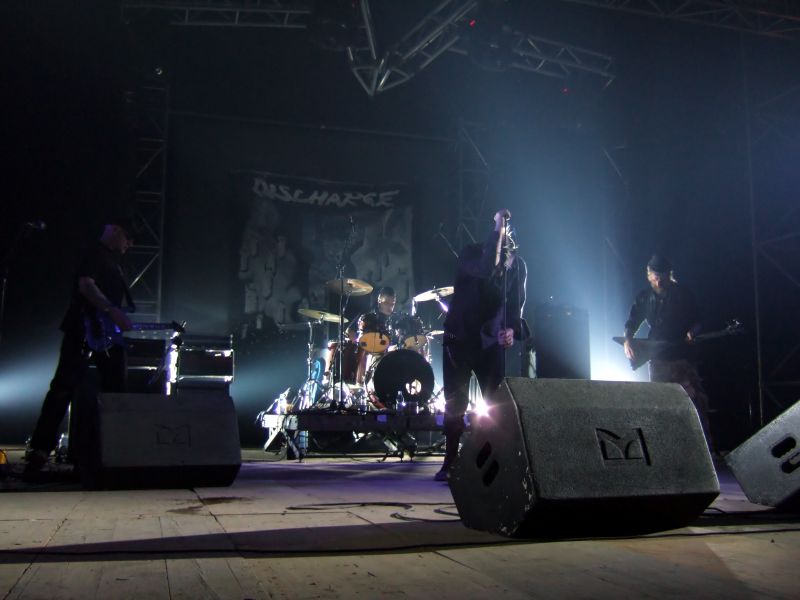
DISCHARGE are a British hardcore punk band formed in 1977. The band is characterised by a minimalistic approach to music and lyrics. A heavy, distorted and grinding guitar-driven sound and raw, shouted vocals similar to a political speech, with lyrics on anarchistic and pacifistic themes.


While the band undergone several line-up changes throughout its history, the classic line-up from the early 1980s featured bassist Wainwright, drummer Gary Maloney, Anthony "Bones" Roberts playing guitar, and vocalist Kelvin "Cal" Morris.


AllMusic calls the band's sound a "high-speed noise overload" characterised by "ferocious noise blasts". The band's 1982 debut album, »Hear Nothing See Nothing Say Nothing«, went to number two in the UK Indie Charts and number 40 in the UK Album Charts. In the early 1980s, numerous DISCHARGE singles and EPs landed in the top 10 of the UK Indie Charts, including the 1981 EP »Why?« and the 1982 single 'State Violence State Control'.


2015, DISCHARGE announced their signing with Nuclear Blast. After the release of the »New World Order« EP, the time has now come to unleash their new studio album, their label debut, on an unsuspecting world: It's titled »End Of Days«and was released in April 2016.
The band is characterized by a minimalistic approach to music and lyrics, using a heavy, distorted, and grinding guitar-driven sound and raw, shouted vocals similar to a political speech, with lyrics on anarchist and pacifist themes, over intense drone-like rhythms. The band's sound has been called a "grave-black aural acid assault."


Discharge "paved the way for an astounding array of politically motivated, musically intense and deeply confrontational bands". Discharge was "explicitly political" and used a "revolutionary/activist" attitude that moved hardcore away from its pub rock origins and towards a "dangerous and provocative" territory.
Hear Nothing See Nothing Say Nothing is the debut studio album by English hardcore punk band Discharge, released on 21 May 1982 by Clay Records. While some critics at the time dismissed this album as "unmusical",[citation needed] in retrospect, it is viewed both a classic of the era and the peak of Discharge's career.

Treble magazine calls "Hear Nothing Say Nothing" one of the ten essential hardcore albums, in a list that includes Black Flag's Damaged and the Dead Kennedys' Fresh Fruit for Rotting Vegetables. In the early 1980s, numerous singles and EPs placed in the top 10 of the UK Indie Charts, including the 1981 EP Why? (#1) and the 1982 single State Violence State Control.


Hear Nothing See Nothing Say Nothing paved the way for various extreme metal styles such as thrash metal, black metal, crust punk, and grindcore. The band's "brutal, extremist approach" and "extreme thrash noise" style of playing eventually led to the thrash genre. "Discharge's influence on heavy metal is incalculable and metal superstars such as Metallica, Anthrax and Sepultura have covered Discharge's songs in tribute."  Discharge was a major influence on at least two generations of metal. Along with Napalm Death and Extreme Noise Terror, Discharge have been credited for laying the groundwork for grindcore. The musical genre of d-beat is named after Discharge and the band's distinctive drumbeat.


The album is characterized by a minimalistic approach of music and lyrics, a heavy, distorted, and grinding guitar-driven sound and raw, shouted vocals similar to a political speech, with lyrics on anti-war themes. AllMusic calls the band's sound a "high-speed noise overload" characterized by "ferocious noise blasts".
The album is considered highly important in the evolution of extreme forms of metal and punk music, paving the way for genres such as thrash metal, black metal, crust punk and grindcore.

All tracks are written by Discharge (Cal Morris, Bones, Rainy and Garry Maloney).

Personnel

Cal Morris – vocals
Bones – guitar
Rainy – bass
Garry Moloney – drums
Mike "Clay" Stone - producer


TRAXS

01. State Violence State Control  2:43
02. Hear Nothing See Nothing Say Nothing  1:33
03. The Nightmare Continues    1:51
04. The Final Blood Bath    1:42
05. Protest and Survive     2:17
06. I Won't Subscribe     1:39
07. Drunk With Power     2:46
08. Meanwhile    1:30
09. Dooms'Day
10. A Hell on Earth    1:54
11. Cries of Help    3:07
12. The Possibility of Life's Destruction  1:17
13. Q: And Children? A: And Children    1:49
14. The Blood Runs Red  1:36
15. Free Speech for the Dumb    2:18
16. The End    2:32


WHY ? EP 1981


Why is the 4th EP of Discharge released in 1981 on Clay Records. It is sometimes confused as the debut album by the band. It reached #1 on the UK Indie Charts in 1981.
The band's 1981 EP Why? was their fourth short-form release, but its 10 songs (in 14 minutes!) made it their longest and it also became their most successful to that point, hitting the top of the U.K. indie charts at the time. "Visions of War" leads off with an unrepentantly angry and punishing attack, and became one of the band's signature songs, but the other nine songs were equally aggressive and unapologetic.

While hardcore has a lineage as diverse and untraceable as punk rock itself, it's inarguable that the first few releases by anarchist/pacifist punks Discharge paved the way for an astounding array of politically motivated, musically intense and deeply confrontational bands who flew the hardcore banner.
( Info Here )


TRAXS

01. Visions Of War     1:41
02. Does This System Work     1:17
03. A Look At Tomorrow     1:57
04. Why     1:11
05. Maimed And Slaughtered     1:06
06. Mania For Conquest     1:16
07. Ain't No Feeble Bastard     1:30
08. Is This To Be     1:31
09. Massacre Of Innocents (Air Attack)     1:23
10. Why     1:49
11. Realities of War  1:10
12. They Declare It  1:12


Tuesday, November 12, 2019

Brian Keane + Omar Faruk Tekbilek: Fire dance 1990


OMAR FARUK TEKBILEK

 Omer Faruk Tekbilek (Turkish: Omer Faruk Tekbilek, born 1951) is a Turkish musician and composer, who plays a wide range of wind, string, percussion and electronic instruments. He has developed a style that builds on traditional Sufi music, but includes inspiration from ambient electronic musicians, most notably Brian Keane. He is best known for his performances with the flute-like ney, but also plays the piccolo-like kaval, and the double-reed zurna. Among stringed instruments, he plays the oud and the baglama.


Tekbilek's father was a Turk, a religious man who called out the prayers during services in a mosque. His mother was from Egypt, and her love of the music of Reyad Elsonbaty was passed to her son, who grew up loving Arabesque music. As a young man, Faruk had studied Sufism and had thought of devoting his life to this mystical branch of Islam. At age 15, he decided to become a professional musician, and quit school. With his brother, he moved to Istanbul, where he befriended a mystical saxophone player named Ismet Siral, who had developed an approach to music based upon intuition: "He would say things like, let's play for birds, let's play for pictures".


In 1971, Tekbilek toured the United States with a Turkish folk ensemble and met his future wife. After completing his compulsory military service in Turkey, Tekbilek returned to America and found few opportunities for a musician of his training.

BRIAN KEANE

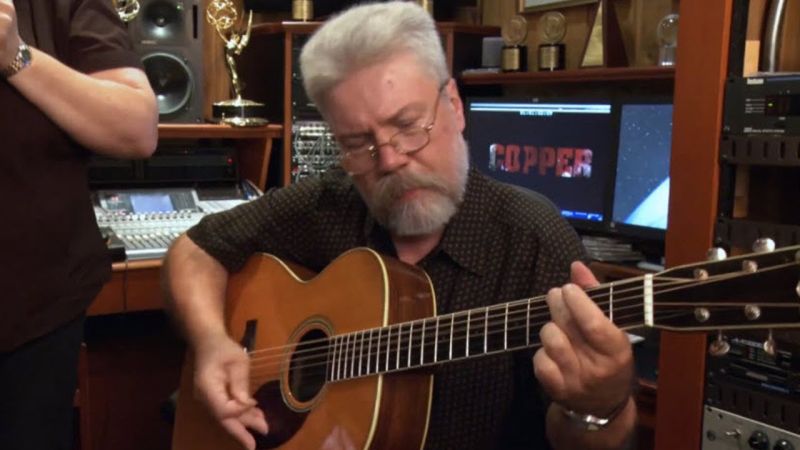
 Brian Keane (born January 18, 1953) is an American composer, music producer, and guitarist. He has composed the music for hundreds of films and television shows and produced over a hundred record albums. Keane is known as a world class guitarist, a musical pioneer in scoring music for television documentaries, a leading record producer of the 1980s and 1990s, and one of the most prominent and influential composers of his era.


Keane has scored well over one hundred award-winning documentaries and films, including eighteen Emmy winners for best documentary or series (among sixty seven nominations), nine Peabody Award-winning films, six Oscar nominated films, and one Academy Award-winning film Keane has won four Emmy Awards out of twenty nominations.


As a record producer, Keane has produced over three dozen Billboard charting albums with over 150 commercial albums in total. He is particularly known for producing ethnic and new-age music. Keane's many credits as a producer include Winter Solstice for Windham Hill Records, the Grammy Award-winning Long Journey Home: The Irish in America soundtrack album for RCA Records and his influential work with middle eastern musician Omar Faruk Tekbilek.

FIRE DANCE

 Fire Dance is a natural progression from Suleyman. A plethora of Middle Eastern and North African instruments has been blended with synthesizers, guitar, and sophisticated orchestrations. The focus of Fire Dance has been expanded beyond Turkey, to include music from North African, Egyptian, and other Middle Eastern and Arabic sources. This recording begins with the sound of the desert wind in Somewhere in the Sahara.

Faruk’s enchanted ney enters from the distance with flourishes of goat bells. Orchestrations sneak in and build to a guitar solo with lavish synthesizer effects. The whole track then dissolves into Oglan Boyun, as if we have traveled over a dune and discovered a village in celebration, surrounded by the vast desert. As Oglan Boyun ends, we are left with Faruk’s haunting voice floating out of the wind in A Call to Prayer. This soulful segment gives way to a magical ney section orchestrated to depict a garden of earthly delights. Faruk’s voice returns in a powerful whirlwind of sound, followed by the drifting Desert Twilight. Brian’s guitar opens this melodic piece with a rich, peaceful introduction. Faruk enters on the ney in an expansive and warm tone, complemented in the bridge by the baglama, adding an Eastern flavor. The music fades, leaving the listener with serenely quiet beauty evoking the title, Desert Twilight. A Passage East is a showcase for both
Faruk’s impeccable percussion and Brian’s superb guitar chops. In Song of the Pharaohs, the wind and Faruk’s haunting ney return to create the mystical impression of the distant time of the ancient pharaohs’ rule. Enchanted by elaborate orchestrations, flourishes of windchimes, the voices of strangers, distant horns, and synthesizers that seem to defy conventional spatial dimensions, this piece assumes a psychedelic atmosphere. Beledy introduces us to the zurna, an oboe-like instrument with a very distinctive Middle Eastern sound. This composition is in the Arabic style, featuring very strong passages. Fire Dance is an energetic piece that demonstrates why Tekbilek and Keane are at the forefront of their respective musicial fields and the magical fertility of their collaboration. Ask is a contemporary Middle Eastern standard showcasing Faruk’s proficiency on the oud. Village Song is a traditional Turkish folk song in 9/8 meter featuring Faruk on percussion.
Modern Mystics brings the two musicians/composers together, on ney and guitar, in a meditative

setting. Sahara (Reprise), with Brian on guitar, was an out take that was too special to leave off this recording. Spirit of Ancestors shows a deep mystical side with Faruk’s powerful, searching voice. Halay concludes the recording with an uplifting, joyous celebration and driving rhythm. With Fire Dance, Omar Faruk Tekbilek and Brian Keane have created a unique recording that embraces many moods, at once energetic and meditative, mystical and joyous. Imbued with grace, this music transports the listener to a magical land where patterns of rich Middle Eastern traditions are joined in music. Fire Dance is an adventure in transformation from which there is no turning back.
( Read HERE: )


TRACKS

01.a. Somewhere In The Sahara
Written-By – Brian Keane, Omar Faruk Tekbilek  2:30
01.b. Oglan Boyun
Arranged By – Brian KeaneWritten By – Traditional  5:11
01.c. A Call To Prayer
Written-By – Brian Keane, Omar Faruk Tekbilek  5:20
02. Desert Twilight
Written-By – Brian Keane  5:11
03. A Passage East
Written-By – Brian Keane  3:06
04. Song Of The Pharaohs
Arranged By – Brian KeaneWritten By – Traditional  5:57
05. Beledy
Written-By – Omar Faruk Tekbilek  5:27
06. Fire Dance
Arranged By – Brian Keane, Omar Faruk TekbilekWritten By – Traditional  5:27
07. Ask
Arranged By – Brian Keane, Omar Faruk TekbilekWritten-By – S. Sagbas  6:24
08. Village Song
Arranged By – Brian Keane, Omar Faruk TekbilekWritten By – Traditional  4:16
09. Modern Mystics
Written-By – Brian Keane, Omar Faruk Tekbilek  2:59
10. Sahara (Reprise)
Written-By – Brian Keane  1:16
11. Spirit Of The Ancestors
Written-By – Omar Faruk Tekbilek  5:31
12. Halay
Arranged By – Brian KeaneWritten-By – Traditional  5:56