ua

ua

Thursday, May 14, 2020

V.A: This Is Psychedelia. Over 3 Hours Of Mind - Expanding Acid Rock 2007


Psychedelia refers to psychedelic art, psychedelic music and the subculture that originated in the psychedelic experience of the 1960s, by people who used psychedelic drugs such as LSD, mescaline (found in peyote) and psilocybin (found in magic mushrooms).

 
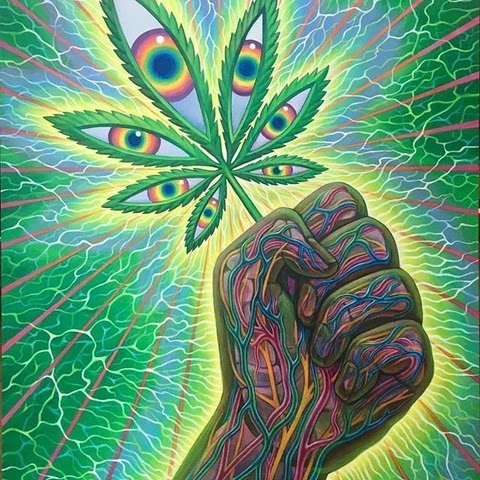
Psychedelic art and music typically recreate or reflect the experience of altered consciousness.
Psychedelic art uses highly distorted, surreal visuals, bright colors and full spectrums and animation (including cartoons) to evoke, convey, or enhance the psychedelic experience. Psychedelic music uses distorted electric guitar, Indian music elements such as the sitar, tabla, electronic effects, sound effects and reverberation, and elaborate studio effects, such as playing tapes backwards or panning the music from one side to another.


The term psychedelic is derived from the Greek words ψυχή (psyche, "soul, mind") and δηλείν (delein, "to manifest"), hence "mind manifesting", the implication being that psychedelics can
develop unused potentials of the human mind. The word was coined in 1956 by British psychiatrist, Humphry Osmond, the spelling loathed by American ethnobotanist Richard Schultes, but championed by the American psychologist, Timothy Leary.

Aldous Huxley had suggested to Humphry Osmond in 1956 his own coinage phanerothyme (Greek phaneroein- "visible" and Greek thymos "soul", thus "visible soul"). Recently, the term entheogenic has come into use to denote the use of psychedelic drugs in a religious, spiritual, and mystical context.


The psychedelic movement of the 1960s imprinted a kaleidoscopic stamp on musical cultures from
across the globe, from the Tropic artists in Brazil to the Afrobeat groups in West Africa and even the legendary Bollywood composers. Carefully selected from albums in the Rough Guide Psychedelic series, these mind-bending, rebellious and deeply cool grooves create a heady psychedelic brew which is guaranteed to open up new musical doors.
In the minds of most people, the psychedelic era lasted just a few short (though eventful and multi-coloured) years.


As the Beat Generation of Burroughs, Kerouac and Ginsberg morphed into an LSD culture inspired by the writings of Timothy Leary and Aldous Huxley, bands like the Holy Modal
Rounders and the Incredible String Band opened their minds not only to hallucinogens but to the sounds of Indian drones and middle-eastern musical modes. Soon everyone from the Yardbirds to the Monkees were using distortion, reverb and taped sounds played backwards or looped to create new rhythms and textures. But as flower power wilted, Brian Jones, Jimi Hendrix and Janis Joplin died young, rock bands became pompous or progressive and pop groups discovered platform heels and glitter.


Psychedelic rock, also referred to as psychedelia, is a diverse style of rock music inspired, influenced, or representative of psychedelic culture, which is centred on perception-altering hallucinogenic drugs. The music is intended to replicate and enhance the mind-altering experiences of psychedelic drugs, most notably LSD. Many psychedelic groups differ in style, and the label is often applied spuriously.


Originating in the mid-1960s among British and American musicians, the sound of psychedelic rock invokes three core effects of LSD: depersonalization, dechronicization, and dynamization, all of
which detach the user from reality. Musically, the effects may be represented via novelty studio tricks, electronic or non-Western instrumentation, disjunctive song structures, and extended instrumental segments. Some of the earlier 1960s psychedelic rock musicians were based in folk, jazz, and the blues, while others showcased an explicit Indian classical influence called "raga rock." In the 1960s, there existed two main variants of the genre: the whimsical British pop-psychedelia and the harder American West Coast acid rock. While "acid rock" is sometimes deployed interchangeably with the term "psychedelic rock," it also refers more specifically to the heavier and more extreme ends of the genre.


The peak years of psychedelic rock were between 1967 and 1969, with milestone events including the 1967 Summer of Love and the 1969 Woodstock Rock Festival, becoming an international musical
movement associated with a widespread counterculture before beginning a decline as changing attitudes, the loss of some key individuals, and a back-to-basics movement led surviving performers to move into new musical areas. The genre bridged the transition from early blues and folk-based rock to progressive rock and hard rock, and as a result contributed to the development of sub-genres such as heavy metal. Since the late 1970s it has been revived in various forms of neo-psychedelia.


This Rough Guide reflects many aspects of the global psychedelic sphere, not only from the sixties, but continuing through the decades and on into the 21st century.
During the 1970s drug culture wasn't flooding India's shores but the country was undergoing its own social transformation and a DIY garage band scene evolved.
1967 was when psychedelic rock received widespread media attention and a larger audience beyond local psychedelic communities. From 1967 to 1968, psychedelic rock was the prevailing sound of rock music, either in the whimsical British variant, or the harder American West Coast acid rock. Since most of the US acts had yet to release records in the UK, most of the British groups based their sound on what they'd simply read or heard about psychedelic music.


Compared with American psychedelia, British psychedelic music was often more arty in its experimentation, and it tended to stick within pop song structures. In February 1967, the Beatles released the double A-side single "Strawberry Fields Forever" / "Penny Lane", which Ian MacDonald
says launched both the "English pop-pastoral mood" typified by bands such as Pink Floyd, Family, Traffic and Fairport Convention, and English psychedelia's LSD-inspired preoccupation with "nostalgia for the innocent vision of a child". According to Simonelli, the Beatles' single heralded the group's brand of Romanticism as a central tenet of psychedelic rock. Pink Floyd's "Arnold Layne" (March 1967) and "See Emily Play" (June 1967), both written by Syd Barrett, helped set the pattern for British pop-psychedelia.


Jefferson Airplane's Surrealistic Pillow (February 1967) was the first album to come out of San Francisco during this era, which sold well enough to bring the city's music scene to the attention of the record industry: from it they took two of the earliest[contradictory] psychedelic hit singles:
"White Rabbit" and "Somebody to Love". Soon, British clubs like the UFO Club, Middle Earth Club, The Roundhouse, the Country Club and the Art Lab were drawing capacity audiences with psychedelic rock and ground-breaking liquid light shows. A major figure in the development of British psychedelia was the American promoter and record producer Joe Boyd, who moved to London in 1966. He co-founded venues including the UFO Club, produced Pink Floyd's first single, "Arnold Layne", and went on to manage folk and folk rock acts including Nick Drake, the Incredible String Band and Fairport Convention.


[ AllMusic Review by Jeff Tamarkin 

The year 2007, being the 40th anniversary of the so-called Summer of Love, saw no shortage of new compilations and boxed sets attempting to encapsulate the music that defined the subgenre of that era
and has since come to be called psychedelic (no self-respecting hippie would have called it that at the time). Several have done a fine job doing just that, while others have been off the mark, either including music from other time periods or music that could, under no circumstances, fall under the banner of psychedelic.


This three-disc British box straddles a fine line between accomplishing what it sets out to do -- its subtitle, "Over 3 hours of mind-expanding acid rock" puts its goal into clearer perspective -- and teetering into that latter category. On the plus side, it includes key tracks from well-known bands both from America and Britain, among them Jefferson Airplane, Moby Grape, the Velvet Underground, Eric Burdon & the Animals, It's a Beautiful Day, Spirit, the Byrds, Status Quo, Strawberry Alarm Clock, the Nice, 13th Floor Elevators, the Small Faces, and the Yardbirds, all of which could legitimately be considered essential psych.
It also takes chances by tucking in tracks by bands of lesser renown that should have made more of a splash than they did, at least for the the Smoke ("My Friend Jack"), Kak ("Lemonaide Kid"), the Blues Magoos (their sole huge hit, "We Ain't Got Nothin' Yet") and Fleur de Lys ("Circles"). It's debatable whether the Youngbloods' excellent "Darkness, Darkness" or Kenny Rogers & the First Edition's "Just Dropped In" actually qualify as psychedelia, and almost ludicrous that glam pioneer Marc Bolan is included here (although the track, "Misfit," does have stylistic consistencies with some of the better true psych).
 

Several other tracks are obscure enough to have made it to the sub-Nuggets compilations that flourished in the '80s: (the Purple's "Granny Takes a Trip," the Glass Menagerie's take on the Rolling Stones' "She's a Rainbow") are welcome additions here, keeping things interesting. Of course there's a lot missing that qualified as genuine psychedelia, but as an overall intro to the phenomenon, this set, while not perfect, covers enough ground to get a thumbs up as one of those that knows what it's talking about.]


As a musical style, psychedelic rock attempts to replicate the effects of and enhance the mind-altering experiences of hallucinogenic drugs, incorporating new electronic sound effects and recording effects, extended solos, and improvisation.


Various ‎– This Is Psychedelia
Label: Metro Triples ‎– METRTCD827
Format: 3 × CD, Compilation Box Set
Country: UK
Released: 11 Jun 2007
Genre: Rock
Style: Psychedelic Rock

TRACKS

DISC 1.


01. Jefferson Airplane - White Rabbit 2:36
02. Small Faces - Itchycoo Park 2:49
03. Strawberry Alarm Clock - Incense and Peppermints 2:49
04. Yardbirds - Shapes of Things 2:27
05. The Mooche - Hot Smoke & Sassafras 3:12
06. The Byrds - Eight Miles High 3:39
07. The Purple Gang - Granny Takes a Trip 2:36
08. The 13th Floor Elevators - Slip Inside this House 8:03
09. Status Quo - Pictures of Matchstick Men 3:09
10. The Velvet Underground - Venus in Furs 5:12
11. The Glass Menagerie - She's a Rainbow 2:21
12. Kaleidoscope - Keep Your Mind Open 2:18
13. Les Fleur de Lys - Circles 3:04
14. Velvett Fogg - Yellow Cave Woman 6:57
15. H.P. Lovecraft - Electrallentando 6:41

MP3 @ 320 Size: 139 MB
FLAC  Size: 328 MB

DISC 2.


01. Spirit - Fresh Garbage 3:16
02. The Animals - Sky Pilot 7:31
03. The First Edition - Just Dropped In (To See What Condition my Condition Was In) 3:21
04. Honeybus - Under the Silent Tree 4:02
05. Moby Grape - Hey Grandma 2:32
06. Marc Bolan - Misfit 1:54
07. Blonde on Blonde - Spinning Wheel 2:46
08. Kak - Lemonaide Kid 5:57
09. Nirvana - Rainbow Chaser 2:37
10. Peter Thorogood - Haunted 3:14
11. West Coast Consortium - Colour Sergeant Lillywhite 3:08
12. The Orange Machine - Real Life Permanent Dream 3:17
13. The Poets - Locked in a Room 3:03
14. Man - Sudden Life 4:28
15. Status Quo - Mr Mind Detector 4:04
16. Onyx - Tamaris Khan 2:53

MP3 @ 320 Size: 139 MB
FLAC  Size: 352 MB

DISC 3.


01. It's a Beautiful Day - White Bird 6:09
02. The Nice - Flower King Of Flies 3:20
03. The Youngbloods - Darkness, Darkness 3:51
04. Small Faces - Long Agos and Worlds Apart 2:37
05. Blues Magoos - (We Ain't Got) Nothin' Yet 2:18
06. Status Quo - You're Just What I Was Looking for Today 3:49
07. The Smoke - My Friend Jack 3:15
08. The Searchers - Crazy Dreams 2:37
09. The Orange Seaweed - Pictures in the Sky 3:03
10. Pussy - The Open Ground 3:36
11. The Bystanders - Cave of Clear Light 3:44
12. Nico - Little Sister 4:27
13. Episode Six - I Can See Through You 3:26
14. The Rockin' Berries - Yellow Rainbow 2:49
15. The New Formula - Stay Indoors 4:16
16. The Tremeloes - Suddenly Winter 2:24

MP3 @ 320 Size: 134 MB
FLAC  Size: 303 MB

THE ANIMALS: SKY PILOT LYRICS

He blesses the boys as they stand in line
The smell of gun grease
and the bayonets they shine
He's there to help them all that he can
To make them feel wanted he's a good holy man
Sky pilot,
Sky pilot,
How high can you fly?
You'll never, never, never reach the sky.

He smiles at the young soldiers
Tells them it's all right
He knows of their fear in the forthcoming fight
Soon there'll be blood and many will die
Mothers and fathers back home they will cry
Sky pilot,
Sky pilot,
How high can you fly?
You'll never, never, never reach the sky.

He mumbles a prayer and it ends with a smile
The order is given
They move down the line
But he'll stay behind and he'll meditate
But it won't stop the bleeding or ease the hate
As the young men move out into the battle zone
He feels good, with God you're never alone
He feels tired and he lays on his bed
Hopes the men will find courage
in the words that he said
Sky pilot,
Sky pilot,
How high can you fly?
You'll never, never, never reach the sky.

You're soldiers of God, you must understand
The fate of your country is in your young hands
May God give you strength
Do your job real well
If it all was worth it
Only time it will tell

In the morning they return
With tears in their eyes
The stench of death drifts up to the skies
A soldier so ill looks at the sky pilot
Remembers the words
"Thou shalt not kill."
Sky pilot,
Sky pilot,
How high can you fly?
You'll never, never, never reach the sky.

Sunday, May 10, 2020

The Feelies: Crazy Rhytms 1980


The Feelies are an American rock band from Haledon, New Jersey. They formed in 1976 and disbanded in 1992 having released four albums. The band reunited in 2008, and released new albums in 2011 and 2017.


Haledon, New Jersey (USA). It's here, in this little town in the NY area, where the story began. In the mid-seventies, when the punk era was about to explode, Glenn Mercer and Bill Million started playing together in a band called The Outkids. The drummer was Dave Weckerman, while Glenn played guitar and Bill the bass guitar. They toured for a while in the area, and in 1976, when they met Keith Clayton (bass) and Vinnie DeNunzio (drums), Bill changed to the rhythm guitar and Dave to percussions: The Feelies were born.


It took some time before the band could enter a studio to record its first album. In the meantime the drummer changed again, Anton Fier joined the group. In 1978 the Village Voice dubbed the then-unsigned Feelies "The Best Underground Band in New York", and one year later they finally published their first single: Fa Cé-La (Rough Trade). Then a few months later the band signed with Stiff and in 1980 Crazy Rhythms was released.CBGB'S Flyer


It's a wonderful record, very original compared to the punk/new wave scene of those years. With nervous drumming, unconventional silences between songs, and a wonderful guitar sound, Crazy Rhythms is a masterpiece that influenced a lot of musicians: one name above the others, R.E.M.


But something went wrong. Despite the enthusiastic critics on both sides of the ocean, the record
didn't sell very well; moreover, the band didn't like to play live so they made relatively few promotional shows, and people at Stiff didn't appreciate it. And the group was not satisfied with the label too: they had the impression that Stiff was more interested in self promotion than in bands' development. These problems culminated with Stiff's total displeasure with a demo tape of new material which The Feelies sent them. So eventually  the band and the label decided to mutually part ways. By the way, several of the songs included in that demo tape later appeared on The Good Earth.


Keith Clayton quit the band and so did Anton Fier (he joined the Lounge Lizards and later he founded the Golden Palominos).
Nobody officially heard of the Feelies anymore for about 5 years. However, in this period Glenn, Bill and Dave continued to be active with new projects: first The Willies (that produced no records) and then The Trypes; here they started playing with Brenda Sauter (bass) and Stanley Demeski (drums). The Trypes made a very good EP called The Explorers Hold, four songs in a particular psychedelic mood.


Although not commercially successful, the Feelies had an influence on the development of American indie rock. Their first album, Crazy Rhythms (Stiff Records, 1980) was cited by R.E.M. as a major influence on their sound. The Feelies were influenced by the Velvet Underground and Lou Reed.


The Feelies rarely worked with outside producers although Pete Buck (of R.E.M fame) did produce one of their most successful albums. and created shimmering soundscapes with multiple guitar layers and percussion.[according to whom?] They frequently played at Maxwell's, a live music venue and
bar/restaurant in Hoboken, during the 1980s.
The band's name is taken from a fictional entertainment device described in Aldous Huxley's Brave New World. Glenn Mercer, Bill Million, Dave Weckerman and vocalist Richard Reilly began playing together in 1976 in Haledon, New Jersey in a band called the Outkids. The Outkids evolved into the Feelies with the addition of Vinny DeNunzio on drums and John Papesca on bass.

In 1978, the Village Voice dubbed the then-unsigned Feelies "The Best Underground Band in New York". With the line-up of Mercer, Million, Vinny DeNunzio's brother Keith DeNunzio on bass and Anton Fier on drums, the Feelies released their first single, "Fa Cé-La", on Rough Trade Records in 1979.
The Feelies' debut album, Crazy Rhythms, was released on Stiff Records in 1980, featuring the same line-up as on the "Fa Cé-La" Rough Trade single.


[ AllMusic Review by Ned Raggett  [-]

Even the cover is a winner, with a washed-out look that screams new wave via horn-rimmed glasses, even more so than contemporaneous pictures of either Elvis Costello or the Embarrassment. But if it
was all look and no brain, Crazy Rhythms would long ago have been dismissed as an early-'80s relic. That's exactly what this album is not, right from the soft, haunting hints of percussion that preface the suddenly energetic jump of the appropriately titled "The Boy With the Perpetual Nervousness.
" From there the band delivers seven more originals plus a striking cover of the Beatles' "Everybody's Got Something to Hide" that rips along even more quickly than the original. The guitar team of Mercer and Million smokes throughout, whether it's soft, rhythmic chiming with a mysterious, distanced air or blasting, angular solos. But Fier is the band's secret weapon, able to play straight-up beats but aiming at a rumbling, strange punch that updates Velvet Underground/Krautrock trance into giddier realms.


Mercer's obvious Lou Reed vocal inflections make the VU roots even clearer, but even at this stage of the game there's something fresh about the work the quartet does, even 20 years on -- a good blend of past and present, rave-up and reflection. When the group's later label, A&M, finally got around to reissuing the album for the first time stateside, a curious bonus was included: a version of the Rolling Stones' "Paint It, Black," recorded by the later lineup of the band in 1990. Mercer's voice is noticeably different from his decade-old self, but it's an enthusiastic rendition not too far out of place.]


The band played reunion shows in the summer and fall of 2008. A performance at Battery Park in NYC with Sonic Youth followed several warm-up shows at Maxwell's.
In June 2009, the band performed an acoustic show at the Whitney Museum. They also headlined a show at Millennium Park in Chicago.
In September 2009, they performed Crazy Rhythms live in its entirety as part of the All Tomorrow's Parties-curated Don't Look Back series.


BAND MEMBERS


Glenn Mercer – guitars, vocals, keyboards, percussion (1976–1991, 2008–present)
Bill Million – guitars, vocals, percussion (1976–1991, 2008–present)
Stan Demeski – drums and percussion (1983–1991, 2008–present)
Brenda Sauter – bass guitar, violin and backing vocals (1983–1991, 2008–present)
Dave Weckerman – percussion (1984–1991, 2008–present)

FORMER

Vinny DeNunzio – drums (1976–1978)
John Papesca – bass guitar (1976–1979)
Keith DeNunzio a/k/a Keith Clayton – bass guitar, percussion, background vocals (1979–1982)
Anton Fier a/k/a Andy Fisher – drums, percussion (1978–1979)

TRACKS

01. The Boy With Perpetual Nervousness     5:04
02. Fa Ce-La     2:00
03. Loveless Love     5:04
04. Forces At Work     7:05
05. Original Love     2:53
06. Everybody's Got Something To Hide [Except Me And My Monkey] – (Lennon-McCartney)  4:04
07. Moscow Nights     4:21
08. Raised Eyebrows     2:59
09. Crazy Rhythms     6:05
10. Paint It Black – (Jagger/Richards)  2:54

Credits


Bass, Percussion, Vocals – Keith Clayton
Design [Cover Design] – Bill, Glenn
Drums [Drum Kit Percussion] – Anton Fier
Engineer – Brooke Delarco (tracks: 1 to 9), Don Sternecker (tracks: 10), Jim Bonnefond (tracks: 1 to 9), Tom Lazarus (tracks: 1 to 9)
Engineer [Assistant] – Julian Robertson (tracks: 1 to 9)
Guitar, Vocals, Percussion – Bill Million, Glenn Mercer
Photography – Lynne Pickering
Producer – Million, Mercer, Mark Abel (tracks: 1 to 9)
Songwriter – Bill Million (tracks: 1 to 5, 7 to 9), Glenn Mercer (tracks: 1 to 5, 7 to 9)

Recorded at Vanguard Studios, NY. Engineered by Tom Lazarus and Brooke Delarco.
Mixed at House of Music, NJ. Engineered by Jim Bonnefond and assisted by Julian Robertson.
Track 10 recorded at Mixolydian Studios, Boonton, NJ.

MP3 @ 320 Size: 102 MB
FLAC  Size: 271 MB

Thursday, May 07, 2020

Jan Garbarek: Rites 1998


Jan Garbarek (born 4 March 1947) is a Norwegian jazz saxophonist, who is also active in classical
music and world music.
Garbarek was born in Mysen, Norway, the only child of a former Polish prisoner of war, Czesław Garbarek, and a Norwegian farmer's daughter. He grew up in Oslo, stateless until the age of seven, as there was no automatic grant of citizenship in Norway at the time. When he was 21, he married Vigdis. He is the father of musician and composer Anja Garbarek.

Recording almost exclusively for ECM since 1970, he has created a twisted jazz that explores Gregorian chant, Nordic folksong and Indian classical music, but for more than a decade he’s been playing the festival circuit with a quartet that’s often reminiscent of MOR American saxophonists such as David Sanborn or Kenny G, playing simple and accessible melodies on his soprano sax over a rather bland, smooth jazz accompaniment.


As an improvising musician, Jan Garbarek has said that he seeks to make his playing “fit the tone, texture and temperament of the music. It’s about finding a common language.”  The quest to explore that language has ranged widely across time and space, from the folk songs of his native Norway to improvisations around medieval polyphony and the music of the Indian subcontinent and Middle East, as well as jazz. In the course of these musical journeys, the intensely focused sounds of his tenor and soprano saxophones have become among the most instantly recognizable and haunting in contemporary music.


Jan Garbarek rose to international fame in the mid-1970s playing with Keith Jarrett's European Quartet, which released the albums Belonging, My Song and the live recordings Personal Mountains, Nude Ants, and Sleeper. Such collaborations, in the words of Jarrett’s biographer, Ian Carr, took “the art of classic jazz to its highest pinnacle”.


Officium, one of the most significant recordings of Garbarek’s career – and in the history of ECM – was made in 1993 in St Gerold monastery in Austria with the Hilliard Ensemble. Garbarek’s sax – a “fifth voice” – weaves soaring, swooping lines around the polyphony of the vocal quartet, creating effects that are as entrancing as they are unexpected. In 1999 came a sequel, Mnemosyne, which ranged further across time in its musical material, and Officum Novum explored the crossroads between east and west, with particular focus on the music of Armenia.


Garbarek's sound is one of the hallmarks of the ECM Records label, which has released virtually all of his recordings. His style incorporates a sharp-edged tone, long, keening, sustained notes, and
generous use of silence. He began his recording career in the late 1960s, notably featuring on recordings by the American jazz composer George Russell (such as Electronic Sonata for Souls Loved by Nature). By 1973 he had turned his back on the harsh dissonances of avant-garde jazz, retaining only his tone from his previous approach.

Rites is a double album recorded in 1998 and released on the ECM label.

[ AllMusic Review by Thom Jurek 

Since the late '70s, Jan Garbarek has been carving out a place within jazz for the folk and spiritual traditions of the indigenous peoples of Scandinavia, the Netherlands, and finally of those people all over the world.


Rites, a double CD, is his attempt at forging a synthesis that takes improvisation into the heart of ritual music and creates a new form of spiritual from them both. Using a strategy for each of the discs, the first one digs deep into the spiritual and mystical side of his language. Garbarek plays soprano and tenor as well as synthesizers, drum machines, and samples -- always understated, always elegant -- and utilizes the talents of some of his running mates as well as new ones.


Rainer Bruninghaus appears sporadically throughout, as does bassist Eberhard Weber, and drummer/percussion wizard Marilyn Mazur is ubiquitous. The music is slow, tenuous, and repetitive. It hardly matters -- on disc one, anyway -- which of the pieces are being played. All of them have spare, chant-like melodies that are lifted by myriad percussion instruments and keyboards, which provide a spacious ambience in which to enfold them both.


Even Garbarek's trademark icy saxophone -- usually made more so by Manfred Eicher's production --
is warm, watery, and deeply entrenched in this warm mix that falls over listeners like a fine meditation blanket; like that blanket, it begins to stir emotions from deep within the heart of the listener. While these songs all segue into one another, it is worth noting that Garbarek recut "It's OK to Listen to the Grey Voice" for this collection, where it's performed with deeper conviction and fits better than it did on the album it was named for.


Disc two of Rites is a bit of a different story. While the music is indeed intended for ritual, it comes from the celebratory side of the aisle rather than the contemplative one. Here are dances, Garbarek's versions of gospel shouts, processionals, festival waltzes, and all manner of joyful ceremonies completing the circle.


On one collection, listeners get music for prayer, contemplation, and grief, as well as a funky European read of indigenous music for moving to and celebrating. Clearly this is what sets Rites above Garbarek's other recordings, him taking that balance he possessed so early in his career back again and putting it to work in a near-sacred setting.]

TRACKS

All compositions by Jan Garbarek except as indicated

Disc One:


1. Rites - 8:29
2. Where the Rivers Meet - 7:02
3. Vast Plain, Clouds - 5:55
4. So Mild the Wind, So Meek the Water - 6:11
5. Song, Tread Lightly - 7:45
6. It's OK to Listen to the Gray Voice - 6:45
7. Her Wild Ways - 6:46


Disc Two:


1. It's High Time - 3:36
2. One Ying for Every Yang - 6:36
3. Pan - 6:13
4. We Are the Stars - 5:03
5. The Moon Over Mtatsminda (Jansug Kakhidze) - 4:02
6. Malinye (Don Cherry) - 6:22
7. The White Clown - 3:47
8. Evenly They Danced - 5:18
9. Last Rite - 8:25


Personnel


Jan Garbarek - soprano saxophone, tenor saxophone, synthesizers, sampler,percussion Rainer Brüninghaus - piano (Disc One tracks 4, 6 & 7), keyboards (Disc One tracks 3 & 6, Disc Two tracks 2 & 7)
Eberhard Weber - bass (Disc One tracks 3, 4, 6, & 7, Disc Two tracks 2 & 7)
Marilyn Mazur - drums (Disc One tracks 3, 4, 6 & 7, Disc Two tracks 2, 6 & 7), percussion (Disc One tracks 2 & 5)
Tbilisi Symphony Orchestra - conducted by Jansug Kakhidze (Disc Two track 5)
Bugge Wesseltoft - synthesizer (Disc One track 1, Disc Two tracks 1, 8 & 9), accordion (Disc Two track 6)
Sølvguttene Choir - conducted by Torstein Grythe (Disc Two track 4)