ua

ua

Saturday, January 22, 2022

Rick Wakeman: The Six Wives Of Henry VIII 1973


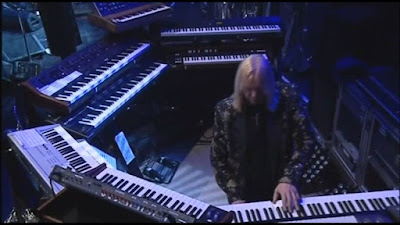
Richard Christopher Wakeman CBE (born 18 May 1949) is an English keyboardist. He is best known


for being in the progressive rock band Yes across five tenures between 1971 and 2004
and for his solo albums released in the 1970s.
                                                                     
Y E S

Born and raised in West London, Wakeman intended to be a concert pianist but quit his studies at the

Royal College of Music in 1969 to become a full-time session musician. His early sessions included playing on "Space Oddity", among others, for David Bowie, and songs by Junior's Eyes, T. Rex, Elton John, and Cat Stevens.
                                     

Wakeman became a member of The Strawbs in 1970 before joining Yes a year later, playing on

some of their most successful albums across two stints until 1980. Wakeman began his solo career in 1973; his highest-selling solo albums are his first three: The Six Wives of Henry VIII (1973), Journey to the Centre of the Earth (1974), and The Myths and Legends of King Arthur and the Knights of the Round Table (1975), all concept albums. He formed his rock band, The English Rock Ensemble, in 1974, with which he continues to perform, and scored his first film, Lisztomania (1975).
                                             

Wakeman pursued solo projects in the 1980s that varied in levels of success; his most successful album

was 1984, released in 1981, which was followed by his minor pop hit single, "Glory Boys", from Silent Nights (1985). He hosted the television show Gastank, and recorded his first of several New-age, ambient, and Christian music albums with Country Airs (1986) and The Gospels (1987), respectively.
                                        

From 1988 to 1990 he was a member of Anderson Bruford Wakeman Howe which led to his third Yes stint until 1992. He returned twice more between 1995 and 2004, during which he completed several

more solo projects and tours, including his most significant of the decade, Return to the Centre of the Earth (1999). From 2016 to 2020, Wakeman was a member of Yes Featuring Jon Anderson, Trevor Rabin, Rick Wakeman. He continues to record albums and perform concerts worldwide in various capacities; his most recent album is The Red Planet (2020).
                                           

Wakeman's discography includes over 90 solo albums spanning a range of musical styles.


KING HENRY VIII


King Henry VIII ruled England for 36 years (1509-1547). Henry VIII is best known for his six wives, and several mistresses he kept on the side. The monarch’s desperate quest for political unification and a healthy male heir drove him to annul two marriages and have two wives beheaded. His chaotic love life caused an unstable succession, foreign policy implications and even led to the break with the Church of Rome.


In common parlance, the wives of Henry VIII were the six queens consort wedded to Henry between 1509 and his death in 1547. In legal terms, King Henry VIII of England had only three wives, because three of his marriages were annulled by the Church of England. However, he was never granted an annulment by the Pope, as he desired, for Catherine of Aragon, his first wife. Annulments declare that a true marriage never took place, unlike a divorce, in which a married couple end their union. Along with his six wives, Henry took several mistresses.
                                                   

What is extraordinary is that Henry was usually a very good husband. And he liked women – that's why he married so many of them! He was very tender to them, we know that he addressed them as "sweetheart." He was a good lover, he was very generous: the wives were given huge settlements of land and jewels – they were loaded with jewels. He was immensely considerate when they were pregnant. But, once he had fallen out of love... he just cut them off. He just withdrew. He abandoned them. They didn't even know he'd left them.

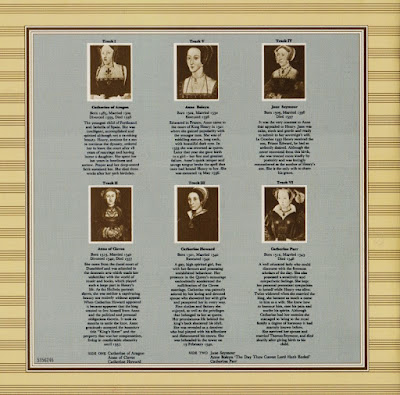
Who Were the Six Wives of Henry VIII?

Catherine of Aragon.
Anne Boleyn.
Jane Seymour.
Anne of Cleves.
Catherine Howard.
Catherine Parr.


The Six Wives of Henry VIII is the second studio album by English keyboardist Rick Wakeman, released in January 1973 on A&M Records. It is an instrumental progressive rock album with its concept based on his interpretations of the musical characteristics of the wives of Henry VIII. After signing with A&M as a solo artist, Wakeman decided on the album's concept during a tour of the United States with the progressive rock band Yes. As he read a book about the subject on his travels, melodies he had written the previous year came to him and were noted down. The album was recorded throughout 1972 with musicians from Yes and Strawbs, the group Wakeman was in prior to Yes, playing on the album.

Rick Wakeman – The Six Wives Of Henry VIII
Label: A&M Records – 5356246
Format:    CD, Album, Reissue
Country: Europe
Released: 2014
Genre: Electronic, Rock
Style: Modern Classical, Prog Rock

TRACKS


01. Catherine Of Aragon  3:45
Bass – Chris Squire, Les Hurdle
Drums – Bill Bruford
Engineer, Mixed By – Ken Scott
Guitar – Mike Egan, Steve Howe
Percussion – Ray Cooper
Vocals – Barry St. John, Judy Powell, Liza Strike
02. Anne Of Cleves  7:50
Bass – Dave Winter
Drums – Alan White
Guitar – Mike Egan
Percussion – Frank Riccotti
03. Catherine Howard  6:36
Banjo [Electric] – Dave Cousins
Bass – Chas Cronk
Drums – Barry De Souza
Guitar – Dave Lambert
Percussion – Frank Riccotti
04. Jane Seymour  4:44
Drums – Alan White
05. Anne Boleyn 'The Day Thou Gavest Lord Hath Ended'  6:31
Arranged By [End Hymn] – Rick Wakeman
Bass – Les Hurdle
Drums – Bill Bruford
Engineer – Ken Scott
Guitar – Mike Egan
Mixed By – Dave Henshall*
Percussion – Ray Cooper
Vocals – Laura Lee, Liza Strike, Sylvia McNeill
Written-By [End Hymn] – E.J. Hopkins
06. Catherine Parr  7:00
Bass – Dave Winter
Drums – Alan White
Guitar – Mike Egan
Percussion – Frank Riccotti

MUSICIANS


Lead musician


Rick Wakeman – 2 Minimoog synthesisers, 2 400-D Mellotrons (one for vocals, sound effects and vibes; the other for brass, strings and flutes), frequency counter, custom mixer, Steinway 9' grand piano, custom-built Hammond C-3 organ, RMI electric piano and harpsichord, ARP synthesiser, Thomas Goff harpsichord, church organ at St Giles-without-Cripplegate, portative organ

Additional musicians


Bill Bruford – drums on "Catherine of Aragon" and "Anne Boleyn"
Ray Cooper – percussion on "Catherine of Aragon" and "Anne Boleyn"
Dave Cousins – electric banjo on "Catherine Howard"
Chas Cronk – bass guitar on "Catherine Howard"
Barry de Souza – drums on "Catherine Howard"
Mike Egan – guitar on "Catherine of Aragon", "Anne of Cleves", "Anne Boleyn", and "Catherine Parr"
Steve Howe – guitar on "Catherine of Aragon"
Les Hurdle – bass guitar on "Catherine of Aragon" and "Anne Boleyn"
Dave Lambert – guitar on "Catherine Howard"
Laura Lee – vocals on "Anne Boleyn"
Sylvia McNeill – vocals on "Anne Boleyn"
Judy Powell – vocals on "Catherine of Aragon"
Frank Ricotti – percussion on "Anne of Cleves", "Catherine Howard", and "Catherine Parr"
Chris Squire – bass guitar on "Catherine of Aragon"
Barry St. John – vocals on "Catherine of Aragon"
Liza Strike – vocals on "Catherine of Aragon" and "Anne Boleyn"
Alan White – drums on "Anne of Cleves", "Jane Seymour", and "Catherine Parr"
Dave Wintour – bass guitar on "Anne of Cleves" and "Catherine Parr"

MP3 @ 320 Size: 89 MB
Flac  Size: 221 MB

Friday, January 21, 2022

Mike Rutherford: Smallcreep's Day 1980


Michael John Cloete Crawford Rutherford (born 2 October 1950) is an English guitarist, bassist,

GENESIS

songwriter, and singer who co-founded the rock band Genesis in 1967. Rutherford and keyboardist Tony Banks are the group's two continuous members.


Initially serving as Genesis's bass guitarist and backing vocalist, Rutherford also performed
GENESIS

most of the band's rhythm guitar parts—frequently on twelve-string guitar—in collaboration with successive Genesis lead guitarists Anthony Phillips and Steve Hackett. Following Hackett's departure from Genesis in 1977, Rutherford assumed the additional role of lead guitarist on the band's studio albums (beginning with ...And Then There Were Three... in 1978).
                                         
GENESIS

Rutherford was one of the main Genesis songwriters throughout their career and wrote the lyrics for

some of the band's biggest international hits, such as "Follow You Follow Me", "Turn It On Again", "Land of Confusion" and "Throwing It All Away". He was inducted into the Rock and Roll Hall of Fame as a member of Genesis in 2010.
                                                 

In addition to his work with Genesis, Rutherford released two solo albums in the early 1980s. In 1985,

he formed Mike + the Mechanics,
which became a chart-topping act and significant live draw in its own right. The group earned Rutherford an Ivor Novello Award for the 1988 single "The Living Years", as well as two Grammys.
                                      

Smallcreep's Day is the first studio album by English guitarist and songwriter Mike Rutherford, released in February 1980 on Charisma Records. It was recorded in 1979 during a period of inactivity

from his rock band Genesis, during which Rutherford and keyboardist Tony Banks recorded their first solo albums. The 24-minute title track is based on the 1965 novel Smallcreep's Day by Peter Currell Brown which tells the story of Mr. Smallcreep and the journey of self-discovery he takes through the assembly line of the factory he has worked in for forty years.
                                  

Smallcreep's Day opens with the 24-minute title track that has seven distinct sections. It is based on the

1965 novel Smallcreep's Day, the only book written by Peter Currell Brown. A satire on modern industrial life, the story follows Pinquean Smallcreep who has worked in the same factory for forty years and embarks on a journey of self-discovery as he follows its assembly line to find out what the factory produces.
                                         

Brown had in fact worked in a factory for forty years himself. Rutherford had read the book roughly three years prior to starting work on the album, noting it had similarities to the Gormenghast series of fantasy novels by Mervyn Peake. Though he considered it "hardly a great piece of literature", he was more impressed with its spirit and the atmosphere it presented as a reader.
He also chose the book as its story and setting were something he could work and develop from and adapted it to have a happy ending.
                                                 
GENESIS

He later noted a strong contrast in themes between the factory and machine-oriented imagery on his


album and the more romantic and fantasy-inspired Genesis songs typical of the time. Rutherford had attempted to pass lines from the book as lyrics, but abandoned the idea as they failed to work effectively. One other track recorded during the sessions for the album, "Compression", was released as the B-side to the single release of "Working in Line".


Mike Rutherford – Smallcreep's Day
Label:Virgin – CASCD1149
Series:    Compact Price
Format:    CD, Album 1989
Country: Europe
Released: 1980
Genre:    Rock
Style:    Prog Rock, Pop Rock

TRACKS


01. Between The Tick & The Tock    3:59
02. Working In Line    3:08
03. After Hours    1:45
04. Cats And Rats (In This Neighbourhood)    4:52
05. Smallcreep Alone    1:25
06. Out Into The Daylight    3:53
07. At The End Of The Day    5:39
08. Moonshine    6:26
09. ime And Time Again    4:54
10. Romani    5:27
11. Every Road    4:15
12. Overnight Job    5:45

MUSICIANS


MIKE RUTHERFORD – guitars, bass guitar


ANTHONY PHILLIPS
– keyboards
Anthony Edwin Phillips (born 23 December 1951) is an English musician, songwriter, producer and singer who gained prominence as the original lead guitarist of the rock band Genesis, from 1967 to 1970. He left in July 1970 and learned to play more instruments, before he began a solo career. His departure from Genesis on the eve of the group's breakthrough to mainstream popularity has led him to be popularly dubbed "the Pete Best of progressive rock" (though unlike Best, Phillips left his band voluntarily).
 

NOEL McCALLA
– vocals
Noel McCalla (born 4 November 1956, in London, England)[1] is a British rock singer. He was the lead vocalist for the rock group Manfred Mann's Earth Band from 1991 until 2009. From 1977, he worked as a backing vocalist for Sniff 'n' the Tears.
 

SIMON PHILLIPS
– drums
Simon Phillips (born 6 February 1957) is a US-based English jazz, pop and rock drummer, songwriter, and record producer. He worked with rock bands during the 1970s and 1980s and was the drummer for the band Toto from 1992 to 2014. Phillips worked as a session drummer for Jeff Beck, Gary Moore, Bernie Marsden, Jon Lord, Nik Kershaw, Mike Oldfield, Judas Priest, Mike Rutherford, Tears for Fears, 10cc and The Who. He was the drummer for The Who during the band's American reunion tour in 1989. He became the drummer for the band Toto in 1992 after the death of Jeff Porcaro.


MORRIS PERT
– percussion
Morris David Brough Pert (8 September 1947 – 27 April 2010) was a Scottish composer, drummer/percussionist, and pianist who composed in the fields of both contemporary classical and jazz-rock music. His compositions include three symphonies, piano music, chamber and solo instrumental music, choral music and "sonic landscapes" for electronic media; a late major work is "Ankh" for Carnyx and electronics written for eminent trombonist John Kenny. As a session musician he played with many musicians, including Paul McCartney, Andrew Lloyd Webber, John Williams, Kate Bush, Mike Oldfield, Sally Oldfield, Peter Gabriel, Peter Hammill, Jon Anderson, Elvis Costello, Bryan Ferry and Talk Talk. Among his awards are five gold albums, an American ASCAP award and a NARAS Grammy Award nomination.

MP3 @ 320 Size: 120 MB
Flac  Size: 313 MB

Wednesday, January 19, 2022

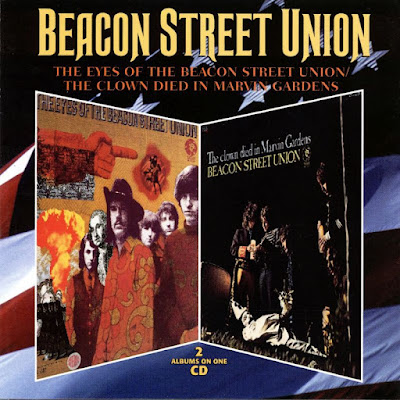
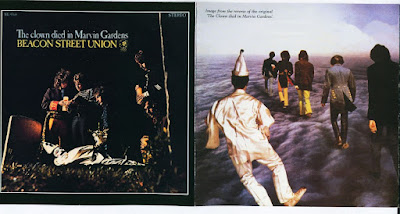
Beacon Street Union: The Eyes Of The Beacon Street Union 1968 + The Clown Died In Marvin Gardens 1968


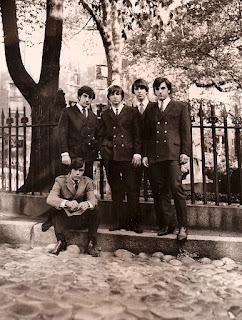
The Beacon Street Union was an American psychedelic rock band in the late 1960s, named for a street in their native Boston, Massachusetts, United States.


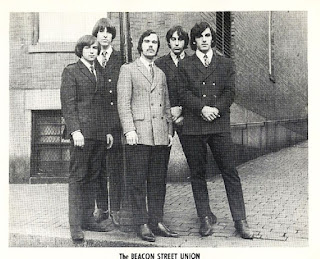
They where a '60s rock band from Boston comprised of John Wright (vocals), Paul Tartachny (guitar,

vocals), Robert Rhodes (keyboards), Wayne Ulaky (bass, vocals), and Richard Weisburg (drums) who moved to New York in 1967 and got caught up in MGM Records' "Bosstown Sound" promotion -- the company tried, unsuccessfully, to promote an invented Boston music scene to rival the real one in San Francisco at the time. Like other bands used in the promotion, the Beacon Street Union suffered from the hype, and though they made two charting albums, they never had much of a chance to succeed.
                                         

  The band was composed of Boston College students, singer John Lincoln Wright (September 23, 1947

- December 4, 2011), guitarist/singer Paul Tartachny, bassist/singer Wayne Ulaky, keyboardist Robert Rhodes (born Rosenblatt) and drummer Richard Weisberg. With the exception of a few rock standards, their diverse music was composed by members of the band, primarily Wright and Ulaky.
                                                

The band's label, MGM Records promoted them as part of the so-called Bosstown Sound (along with

the bands Ultimate Spinach and Orpheus), shepherded by the record producer Alan Lorber. The band met with little nationwide success. Their debut album, The Eyes of the Beacon Street Union, charted at number 75 on May 4, 1968. The band relocated to New York and recorded its second album, The Clown Died in Marvin Gardens.
                                                  

Wright, Ulaky, Weisberg, and Rhodes recorded another album, Come Under Nancy's Tent in 1970

under the band name Eagle for Janus Records. On August 12, 1970, Beacon Street Union opened for Janis Joplin at Harvard Stadium, which was her last public performance before her death. In 1970, The Beacon Street Union recorded their final single "Lord Why Is it So Hard" / "Can’t Find My Fingers", adding Charlie Vatalaro on tenor sax.
                                             

Wright went on to perform and record as a country artist shorty after, and fronted the Sour Mash Boys. He regularly toured across North America, through to the mid-1990s. He died on December 4, 2011, at

age 64, following a series of strokes and a long-time drinking problem. Due to health problems, he stopped performing in 2007. Bandmate and producer Larry Flint admitted by 2007 that Wright "was in pretty bad physical shape, and even his voice was going", with an album recorded that year left unreleased. At the time of his death, he was separated from his wife, who refused to divorce him to ensure that he stayed on her health insurance.


Discography


The Eyes of the Beacon Street Union (March 1968)
The Clown Died in Marvin Gardens (August 1968)
Come Under Nancy's Tent (as Eagle) (March 1970)

THE EYES OF BEACON STREET UNION 1968


The Eyes of the Beacon Street Union is a highly experimental album released around the time of the Bosstown sound. Much better than first albums from Eden's Children and Ultimate Spinach, the disc, however, lacks direction -- and cohesion. Vocalist John Lincoln Wright has the same look that he sports

23 years later on his 1991 Honky Tonk Verite CD, including his trademark cowboy hat, but the similarities between these two albums stop there. The Eyes of the Beacon Street Union is garage rock and psychedelia, and it is a trip. Where Orpheus opted for the serious pop of "Can't Find the Time," producer Wes Farrell includes a recitation by the late Tom Wilson, producer of The Velvet Underground & Nico, acting very avant-garde: "Look into the gray/look past the living streets of Boston/look finally into the eyes of Beacon Street Union."
 

THE CLOWN DIED IN MARVIN GARDENS 1968


The Clown Died in Marvin Gardens is an original statement by a Boston group who was musically superior to Eden's Children and Ultimate Spinach, but not as focused as the Remains, the Hallucinations with Peter Wolf, or the emerging J. Geils Band. Where national groups like the Peanut

Butter Conspiracy may have been misguided and sputtered with no direction, vocalist John Lincoln Wright developed into a first-rate songwriter and a country singer with a purpose. Hearing his work on highly experimental tunes, like the title track or the impressionistic "May I Light Your Cigarette?," is true culture shock. "The Clown's Overture" seems pointless, yet "Angus of Aberdeen" is inspired and a bright spot in the morass that was the Bosstown Sound. The rave-up version of "Blue Suede Shoes" is great, the guitar funneled through effects and brimming with excitement.
 

Beacon Street Union – The Eyes Of The Beacon Street Union / The Clown Died In Marvin Gardens
Label: See For Miles Records Ltd. – SEECD 495
Format:    CD, Compilation
Pays: UK
Sortie: 1998
Genre: Rock
Style: Psychedelic Rock


TRACKS

THE EYES OF BEACON STREET UNION 1968


01. My Love Is    4:09
02. Beautiful Delilah  (Written-By – Chuck Berry)  2:10
03. Sportin' Life    3:08
04. Four Hundred And Five    2:09
05. Mystic Mourning    5:55
06. Sadie Said No    2:51
07. Speed Kills    1:55
08. Blue Avenue    2:49
09. South End Incident    3:53
10. Green Destroys The Gold    3:00
11. The Prophet    4:31


THE CLOWN DIED IN MARVIN GARDENS 1968


12. The Clown Died In Marvin Gardens    3:53
13. The Clown's Overture    2:40
14. Angus Of Aberdeen    4:36
15. Blue Suede Shoes  (Written-By – Carl Perkins)  2:07
16. A Not Very August Afternoon    3:42
17. Now I Taste The Tears  (Written-By – Buzz Clifford)  3:07
18. May I Light Your Cigarette    5:36
19. Baby Please Don't Go    16:49

Crédits


Bass Guitar – Wayne Ulaky
Keyboards, Brass – Robert Rhodes
Lead Guitar, Rhythm Guitar – Paul Tartachny
Percussion – Richard Weisberg
Vocals – John Lincoln Wright
Art Direction [Original] – Acy R. Lehman
Engineer [Director] – Val Valentin
Liner Notes – Brian Hogg
Orchestrated By – Larry Fallon
Producer – Wes Farrell
Written-By – Beacon Street Union (pistes : 3), J. Wright (pistes : 4, 6, 7, 11, 12, 16, 18, 19), L. Fallon (pistes : 13), P. Tartachny (pistes : 4, 16, 19), R. Weisberg (pistes : 4, 5, 14, 16, 19), R. Rhodes (pistes : 4, 5, 16, 19), W. Ulaky (pistes : 1, 4 to 12, 14, 18, 19), W. Farrell (pistes : 4)


MP3 @ 320 Size: 188 MB
Flac  Size: 458 MB